Chip Thinking® for data centre design: *Enhancing efficiency and reducing risk* \\ Brathepan Alagenthiran and Thomas Lockie
Brathepan Alagenthiran and Thomas Lockie on how Bryden Wood's Chip Thinking® methodology uses digital simulation and data-driven design to optimise data centre performance and reduce risk.
Design with data:
Imagine rapidly prototyping physical assets, learning from each iteration, and confidently achieving optimal solutions. At Bryden Wood, we leverage our clients’ knowledge and data to create sophisticated digital simulations early in the design process. This realistic assessment of asset performance allows us to incorporate feedback, reduce risk, and enhance efficiency from the outset.
Understanding Chip Thinking®
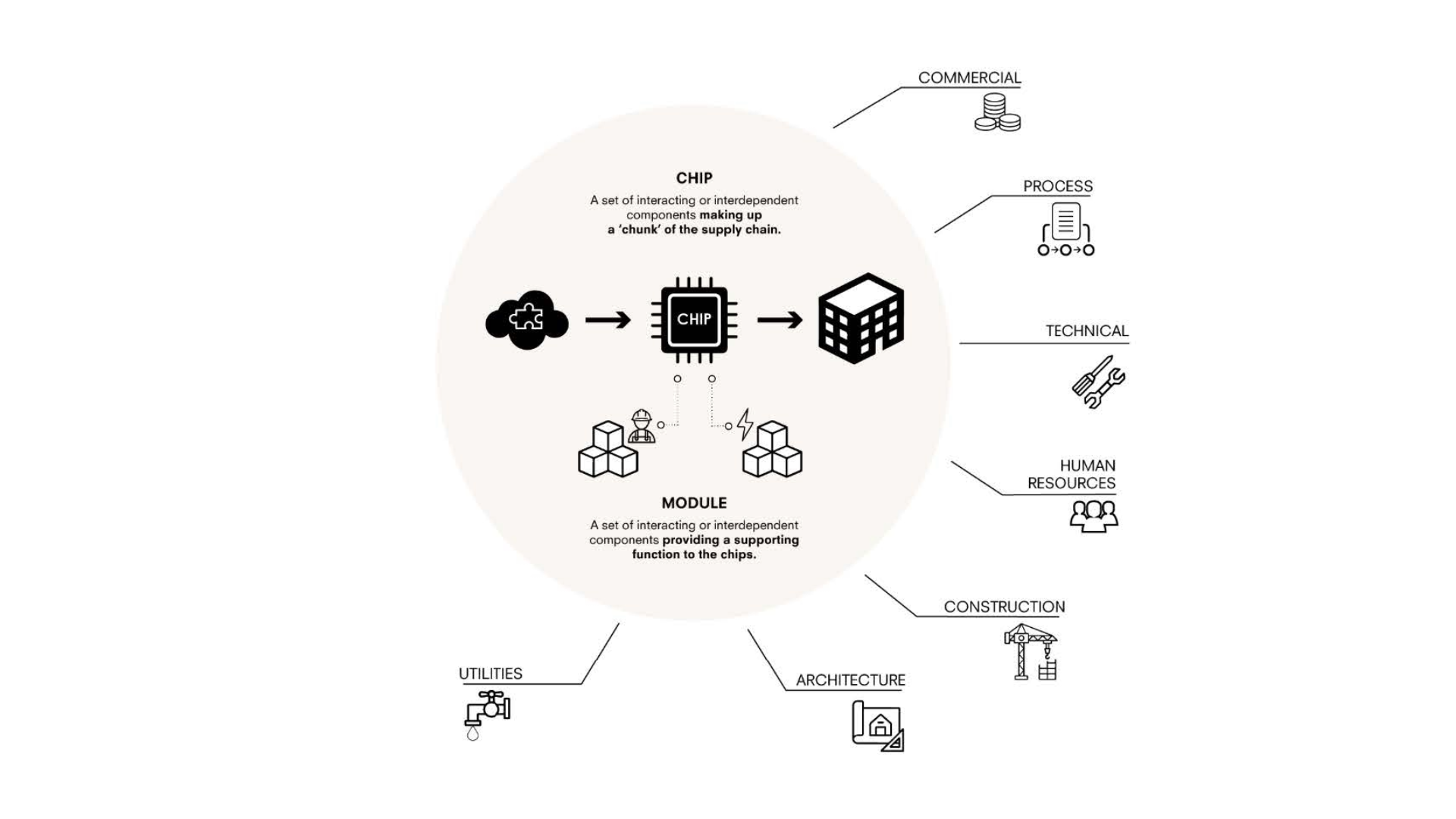
Chip Thinking® is a systematic approach to dissecting the critical components of a data centre facility. By methodically breaking down these elements, we unlock insights that drive design improvements and performance optimisation. Our unique modelling and analytics team – comprising architects, engineers, mathematical modellers, software coders, and data analysts – creates a strategic way of thinking and working that brings information to life.
Chip thinking explanation diagram
Data aggregation + analysis
The diagram above shows the process of using Chip Thinking® to elicit and capture stakeholder requirements at a range of scales, from a single component up to site deployment.
Chip Thinking Sequence: The diagram above shows the process of using Chip Thinking® to elicit and capture stakeholder requirements at a range of scales, from a single component up to site deployment.
Chips serve as a unified knowledge hub where all data and stakeholder insights converge, providing a comprehensive understanding for everyone involved. Through digital simulations, 4D planning, and automated configuration tools, stakeholders can fine-tune facility designs to meet standard requirements, optimising every aspect.
By digitally modelling processes or assets as Chips, we can quickly assess their current effectiveness and explore potential changes across diverse scenarios. This depth of analysis is impossible when focusing solely on individual components. Chips allow easy value adjustments that support targeted process optimisation, leading to seamless improvements in productivity.
Planning for the future becomes straightforward, allowing consideration of various data variables, such as market trends, and calculating their impact on energy or space requirements. Testing multiple options reveals the optimum capital investment to maximise future flexibility across different markets.
Benefits of modelling using chips
Once a client’s requirements are thoroughly assessed, a Chip library becomes a powerful tool for the design team, offering:
Clear project brief understanding.
Efficient test fits to maximise site utilisation.
Future-proof expansion and phasing plans.
Quick costing methods for all options.
Utilities requirements assessment.
Standardisation and design optimisation.

The above diagram illustrates how Chip Thinking® helps in understanding project briefs, test fits, future expansion, and standardisation.
Streamlined design and construction
Reference Design facilitates industrialised construction, including platform approaches (P-DfMA) and manufactured elements. It allows clients to maintain control over intellectual property and incorporate lessons learned to improve design cycles. Multiple uses refine the design, enhancing layouts, space allocation, and functional flows.
Configuring Reference Design
Chip Thinking® lends itself to the use of digital configurators, automating the design process. These tools quickly generate compliant design options, enabling clients to make informed decisions rapidly. This approach not only speeds up the design process but also ensures high-quality, adaptable solutions tailored to specific site conditions and client needs.
Industrialising Reference Design
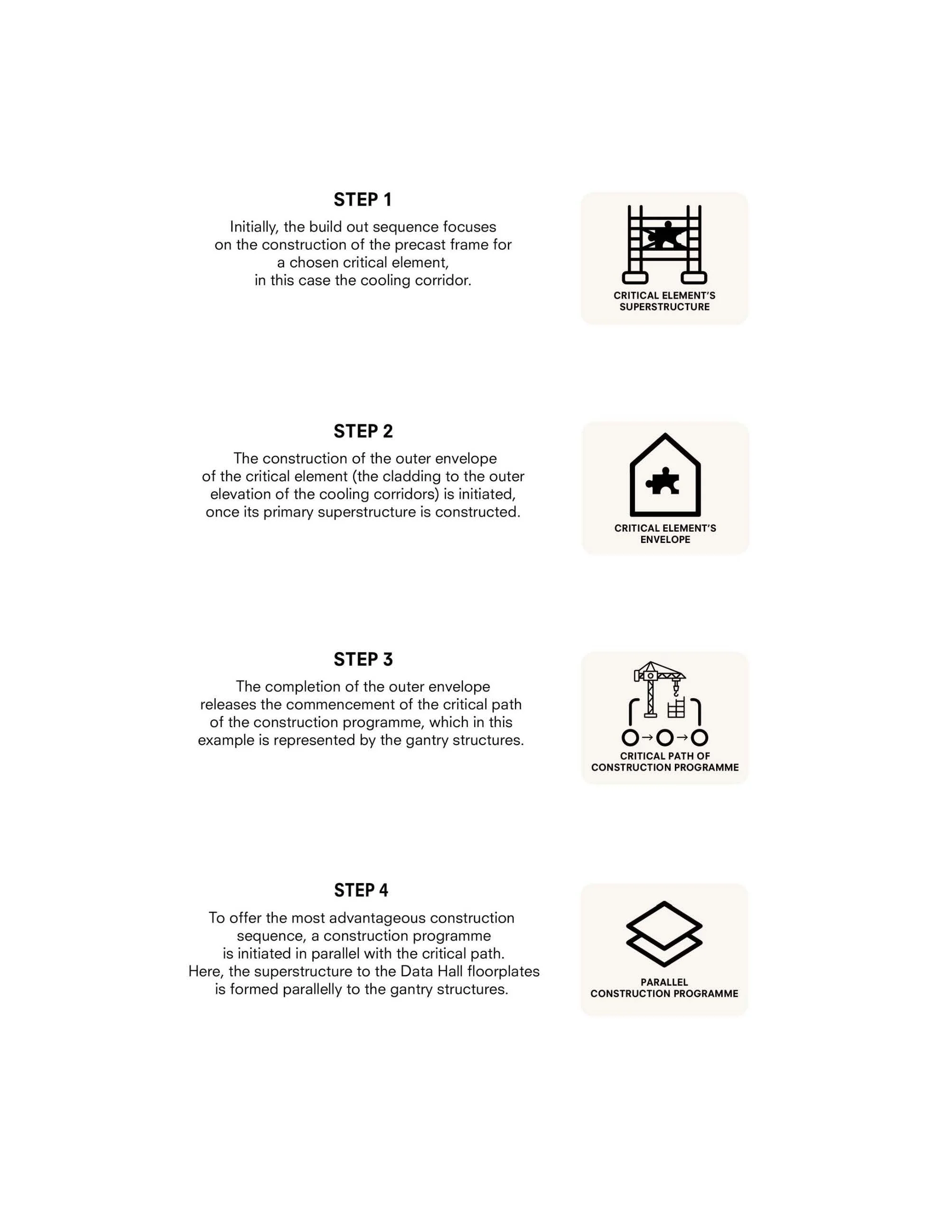
Even traditional construction processes benefit from optimised Reference Designs. However, the true potential lies in unlocking DfMA and industrialised construction. Initial assets may be built traditionally, but subsequent assets can be increasingly industrialised, engaging key suppliers for standardised equipment and prefabricated sections. This phased adoption allows the supply chain to adapt confidently, enhancing efficiency and reducing costs over time.

The above diagram showcases how Reference Design can be industrialised for efficient construction processes.
Conclusion
Chip Thinking® and Reference Design offer a transformative approach to data centre design. By breaking down complex assets into manageable components and standardising designs, Bryden Wood achieves optimised, flexible solutions that meet diverse client needs.
This methodology not only streamlines the design and construction process but also ensures efficient operation and maintenance, paving the way for future innovation in the industry.