*Beyond* data centres \\ Helen Hough
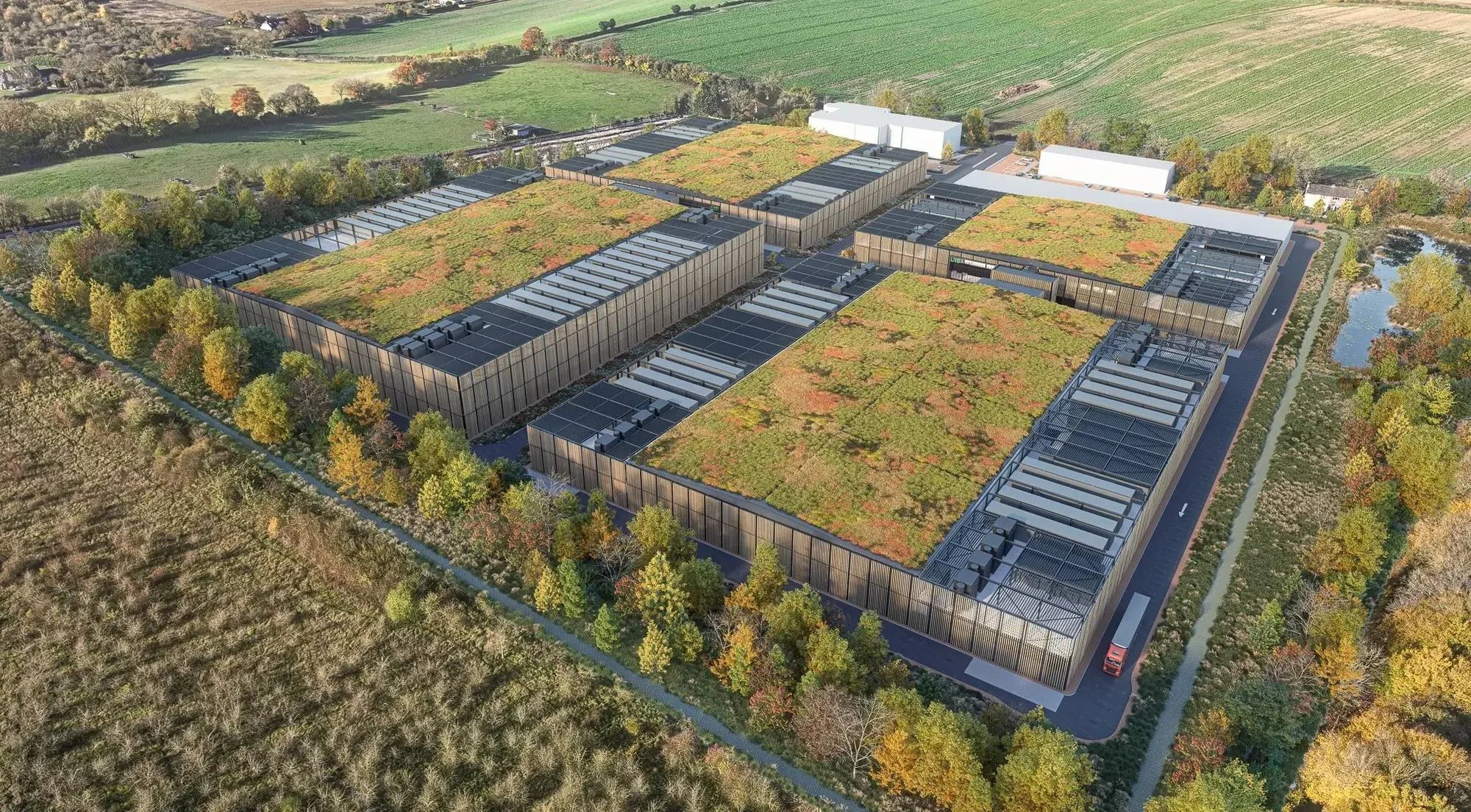
In this article, Helen Hough, who leads Bryden Wood's sustainability team, explores what it takes for a data centre to be credible in its location – from power, water and land to whole life carbon and the communities around it.
Data centres may serve a global digital economy, but their impact is always local.
Our view: a data centre is not sustainable because it achieves a good score. It is sustainable when its demand for power, water and land is credible in its location, its whole life carbon is confronted honestly, and its local impacts are understood and reduced. At Bryden Wood, we bring energy, water, carbon, infrastructure and community considerations together from the earliest stages of project development.
Picture two planning meetings
In the first, the project team presents an efficient building. In the second, local communities ask: what will this development mean for our water supply, electricity network and neighbourhood? The second conversation is the one that matters.
Data centres underpin banking, healthcare, communications, public services and AI. Their benefits are often national or global, while their impacts are experienced locally. Across Europe, regulators are demanding greater transparency, and projects must increasingly show that local demands are understood and responsibly managed.
Efficiency is not the same as sustainability
The industry has become very good at optimising individual metrics. Yet a low Power Usage Effectiveness (PUE) says little about whether a site is drawing power from a constrained grid, using potable water in a stressed region, disturbing neighbouring communities or rejecting heat beside buildings that could use it.
Those trade-offs are real. Removing evaporative cooling will protect local water resources but may increase electricity demand, depending on the climate. Liquid cooling may improve performance at higher rack densities but change the temperature and usefulness of rejected heat. Operational efficiency can also distract from carbon committed through concrete, steel, equipment and replacement cycles.
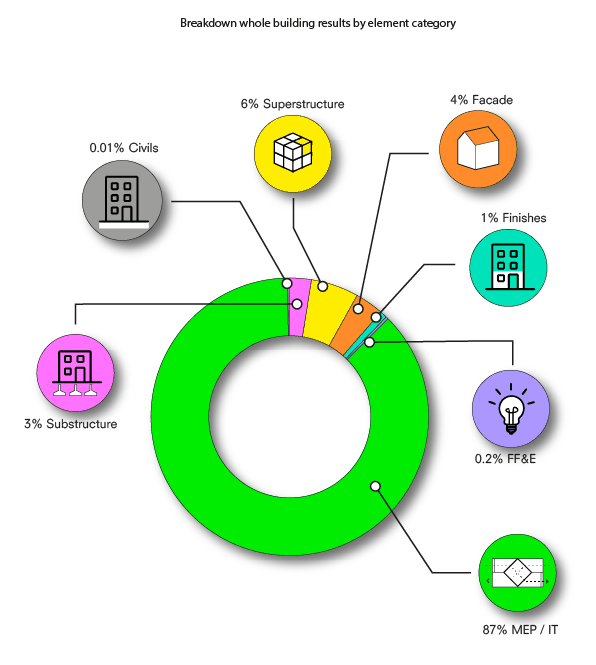
A highly efficient reference design may still be wrong for a particular place. The best solutions consider energy, water, carbon, infrastructure, communities and adaptability together. Responsible construction should do the same, coordinating transport, minimising disruption and preventing pollution.
Early decisions around site selection, capacity, structural strategy and phasing shape everything that follows, while whole-life carbon assessment helps identify emissions across construction, infrastructure, operation and replacement, creating opportunities to reduce them at source.
Designing for the local context
A credible project begins by asking what the location can support. Is water already scarce? When is the grid most constrained? Who could use the heat? What will neighbours see and hear? Which habitats, transport routes and local services could be protected or strengthened? The answers should inform the design.
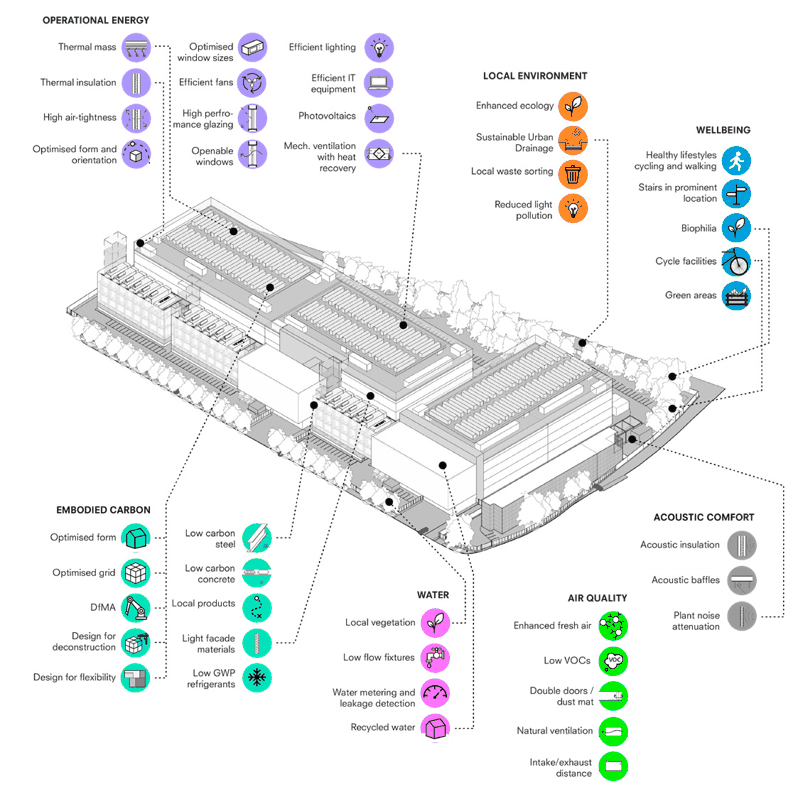
Modern data centres can reduce water demand through closed-loop systems, efficient heat rejection and waterless approaches, even where these carry an energy penalty. Where the grid is constrained, projects can reduce peaks, phase capacity with need and use storage or demand response.
Timing matters as much as total demand. During heatwaves, data centres may need more cooling when electricity networks are already under pressure. Sustainability strategies therefore need to consider when energy is used, not only how much.
Whole life carbon should also challenge how much is built, favour efficient structural and services solutions, and design for adaptation, replacement and reuse. Where a viable heat user exists, temperatures and connections should be designed around that opportunity from the outset rather than added as a claim later.
Evidence should influence the project: site plans improve ecology; energy strategies reduce peaks; water balances show consumption; carbon assessments change quantities and materials; and phasing avoids unused capacity.
The sector needs a social licence
Data centres are essential digital infrastructure, but that status is not a blank cheque. Public confidence depends on openness about resource use, whole life carbon and local impacts. Scrutiny can also influence investment decisions, with developers favouring countries where the planning, infrastructure and public context is more supportive. Early, credible engagement is therefore increasingly important.
Communities experience projects through noise, appearance and their relationship with the surrounding area. High-quality architecture and thoughtful integration should be expected, alongside clear evidence that biodiversity, waste, materials and community impacts have been addressed.
Every major data centre proposal should answer three questions in language a community can understand:
What will the facility require from local energy, water and land systems, and what carbon will be committed across its whole life?
What will the design do to reduce pressure at the times and places that matter?
How will the project respond to local priorities and manage impacts beyond the boundary fence?
The strongest projects publish resource and whole life carbon forecasts, use them to change the design, report actual performance and acknowledge conflicting objectives.
The question is no longer simply how to build a more efficient data centre. It is how to build one that belongs in its place. Bryden Wood helps clients resolve these interconnected challenges by coordinating sustainability strategy and environmental impact assessment alongside design, planning and delivery. This integrated approach identifies risks early, supports evidence-based decisions and develops data centres that are credible in their location.