The *hard yards *of decarbonisation | The Bryden Wood podcast \\Martin Wood & Adrian La Porta
The UK's progress on decarbonisation since the 1990s is real and significant. The Climate Change Committee's reporting confirms it. But the reductions achieved so far have largely come from the sectors where the solutions are relatively straightforward: power generation, surface transport, domestic heating. What remains is harder.
Beyond electrification:
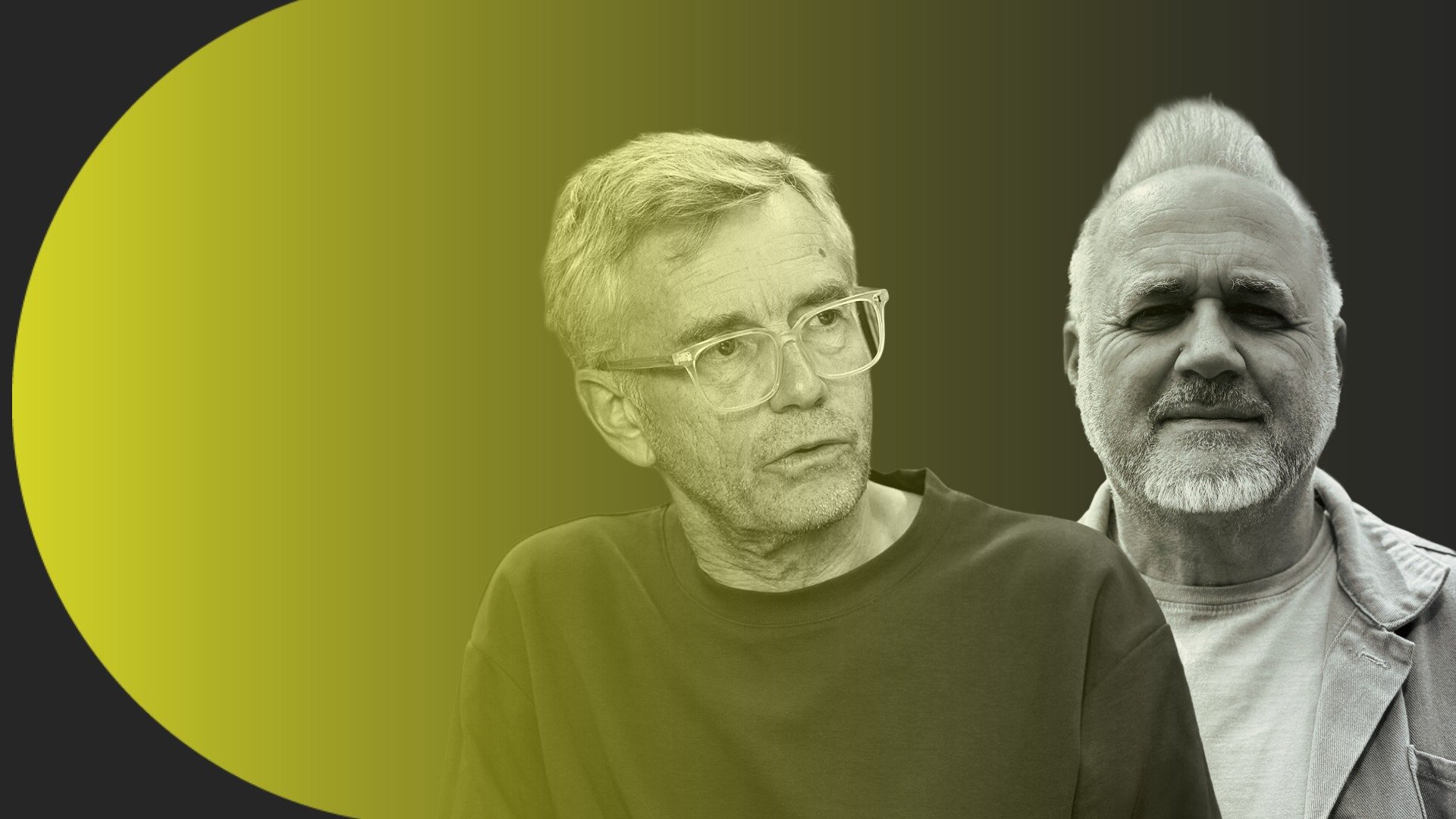
In this episode of the Bryden Wood Podcast, recorded in response to the Climate Change Committee's latest report to parliament, Director Martin Wood and Technical Director Adrian La Porta turn their attention to the sectors where electrification is not the answer: iron, steel, cement, concrete, chemicals, heavy transport, and aviation. These are the hard yards of decarbonisation, and they require a different kind of thinking.
What 'hard to abate' actually means
The term covers sectors where the decarbonisation challenge is not primarily about switching energy sources. In aviation, battery technology cannot achieve the energy density that flight requires – not in any reasonable timescale. In cement production, the calcination process itself releases CO₂ as a chemical reaction, not just as a byproduct of energy use. In steel, the investment required for new low-carbon production methods is enormous, and the economic case for individual operators is weak without external intervention.
These are not niche problems. Cement and concrete are embedded in virtually every piece of infrastructure on earth. Steel production is a strategic industry for most major economies. Aviation connects the global economy. The carbon profile of these sectors is large, and largely invisible in the public conversation about climate change – which tends to focus on cars, boilers, and power stations.
The sustainable aviation fuel question
Martin and Adrian spend time on sustainable aviation fuel as a case study in how hard-to-abate decarbonisation actually works, and what makes it difficult. The biogenic routes to SAF are the most developed: collecting widely distributed biological feedstocks and processing them into a drop-in replacement for conventional kerosene. The distributed feedstock model is, as Adrian notes, a fundamentally different paradigm from the concentrated supply chains of the oil industry, and one with significant economic implications that are not always factored into investment cases.
The e-fuels route – capturing CO₂ and converting it back into usable fuel using energy – generates more scepticism. The process requires large quantities of energy, and the assumption that this energy is itself zero-carbon is, in many scenarios, optimistic. Martin's concern is straightforward: the energy used to produce e-fuels could, in most near-term scenarios, be better deployed elsewhere: decarbonising heat, transport, or industry directly. Unless renewable energy supply expands dramatically, e-fuels risk cannibalising cleaner uses of a constrained resource.
What SAF does demonstrate, and this is the episode's most important policy point, is what government mandate can achieve. The EU's mandate for a rising percentage of sustainable aviation fuel in aviation has created a market that would not otherwise exist. The investment case for SAF producers is built on that mandate, not on the unassisted economics of the technology. Martin and Adrian's argument is that similar mandates are needed across the other hard-to-abate sectors, and that without them, these technologies will not develop fast enough to meet net zero targets.
Carrots, sticks, and unintended consequences
The episode addresses the policy design question directly. Adrian cites the plastic bag ban as an instructive parallel: years of voluntary encouragement and financial incentives produced limited results; a straightforward mandate produced rapid behaviour change. The institutional preference in the UK for carrots over sticks is, he suggests, a real obstacle to the pace of decarbonisation that the timescales demand.
Martin adds a note of caution: the complexity of hard-to-abate sectors makes well-targeted policy genuinely difficult. There are so many competing technologies at different stages of development that even people working in the sector struggle to maintain an accurate picture of what is viable, what is promising, and what is being overstated. The gap between the high-minded principles of the Climate Change Committee and the investment decisions happening on the ground is not well bridged – and without that bridge, both policy and capital are being deployed less effectively than they could be.
The integration problem
The thread that runs through the whole episode, and connects it to Bryden Wood's broader thinking, is the need for systemic rather than individual evaluation of decarbonisation technologies. Most of the companies working in this space are single-technology operators, naturally advocating for their own solution. What is missing, Adrian argues, is an integrator: an organisation, public, private, or hybrid, capable of assessing technologies against each other, modelling how they interact within larger systems, and providing policy makers with a coherent basis for decision-making.
Martin frames the gap clearly: strategy at the top (the Climate Change Committee), investment activity at the bottom (individual technology companies), and an underpopulated middle where the two should be connected. That middle ground is where Bryden Wood operates, and where, Martin suggests, much of the real work of decarbonisation remains to be done.
Onshoring as an opportunity
The episode closes with a point that is easy to overlook in the decarbonisation debate: a significant part of the UK's reported emissions reductions since the 1990s reflects the export of carbon-intensive manufacturing to other countries rather than genuine decarbonisation. As geopolitical pressures drive a degree of onshoring: steel, energy, and critical materials, there is an opportunity to rebuild those industries with a better carbon profile. The new facilities need to be built anyway. Whether they are built using low-carbon technologies is a design and policy choice, not an economic inevitability.
Martin Wood is a co-founder and Director at Bryden Wood. Adrian La Porta is Technical Director.