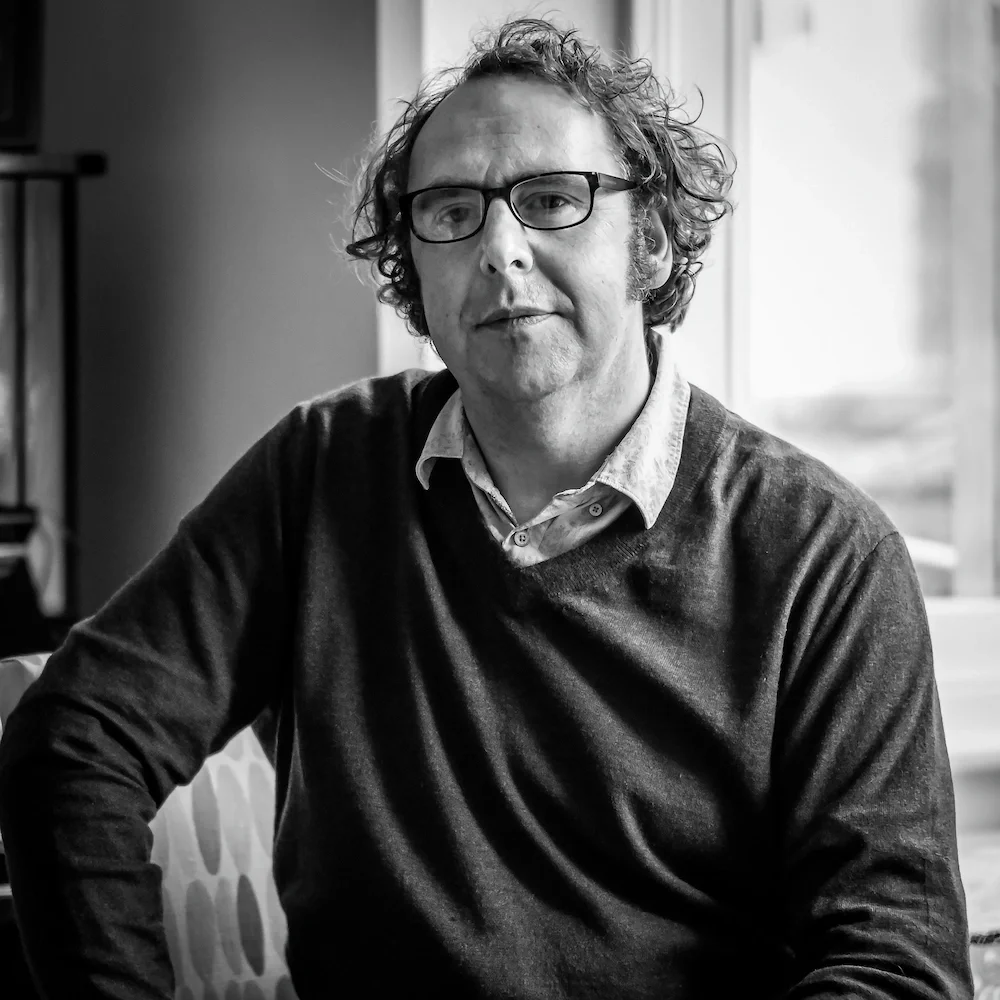
The power of uncertainty: *the challenging path from purpose to project* \\The Dyson blog

In this blog, Professor John Dyson draws on the experiences of Viktor Frankl and General Stockdale to argue that the most dangerous moment in any project is not uncertainty itself – it is the instinct to resolve uncertainty too quickly, by grabbing the nearest branch rather than weathering the discomfort long enough to find the right answer.
The instinct to grab the nearest branch:
We like things in neat boxes; we like the tangible; things we can sense, see, and touch. In times where there is a lack of clarity, it can feel chaotic and unnerving. In these times, we tend to grasp onto something, anything that relieves the feelings of being lost. Like being swept away in a river, we feel we need to grab hold of the nearest branch or rock. These feelings are called Ontological Insecurity by psychologists. The irony is that in these times and moments, we can develop the best ideas, break through arbitrary boundaries, and find amazing solutions.
This is often the situation at the start of a design project. Often called pre-project, this could be a time for exploration, broad thinking, analysis, and imagination; however, often it’s a time for reductive thinking. I have been in design meetings at these early stages where discussions are happening about what might be on the first, second, or third floor of a building. This is before the requirement for a building, let alone a building of a number of stories, has been established. Although there is a good chance some sort of building will be required, the speed with which the teams grasp onto the physical and the detail is astounding. In tandem with the physicalisation of a building is the push to attach a capital cost to this now crystallised construction. What has disappeared and often is lost forever is the purpose and value of the project. If we could live with not-knowing, if we can weather uncertainty, then we can find better outcomes.
The horrific experiences of two people in the 20th Century formed the foundation of an abiding philosophy. Victor Frankl, who survived a concentration camp in WW2 and went on to write ‘Man’s search for meaning,’ and General Stockdale, who was captured in Vietnam and survived brutal imprisonment, both concluded that living with the uncertainty in those times was key to survival. The artificiality of grasping for certainty was a flawed survival strategy. Facing and accepting where you are today, with hope and certainty that you will find a solution, a way out at some point, equips people advantageously.
Both gripping stories and far from the project world, yet they can tell us something about the human condition and how the intuitive response to find certainty, something to hold onto, is very unhelpful at times.
So what does this mean in the world of projects? It means ensuring that the purpose, aspiration, and hope for the project is kept alive. In practical terms, a problem statement and value drivers help this. In hospitals, these should be about health improvement, in pharmaceuticals about patients treated or lives saved, in housing about thriving people.
It means visualising in a way that communicates both something aspirational, while at the same time something with a playful vagueness about it. We used to block units of operations out in bright colours, using pink to designate an area that was only loosely defined.
It means a culture of inclusivity; anybody can have an idea, in fact, those not constrained by having been involved in a subject for many years often ask the best questions and come up with more innovative ideas. Matching this creativity with open-minded expert knowledge can be very powerful.
Above all, it means jointly resisting, as long as is responsibly possible, narrowing to a defined solution, and only then, when it is very clear it matches up to the fundamental purpose and the highest aspirations. In the discomfort of this process, new ideas will shoot and grow.