
Process Engineering: start with the process, not the building
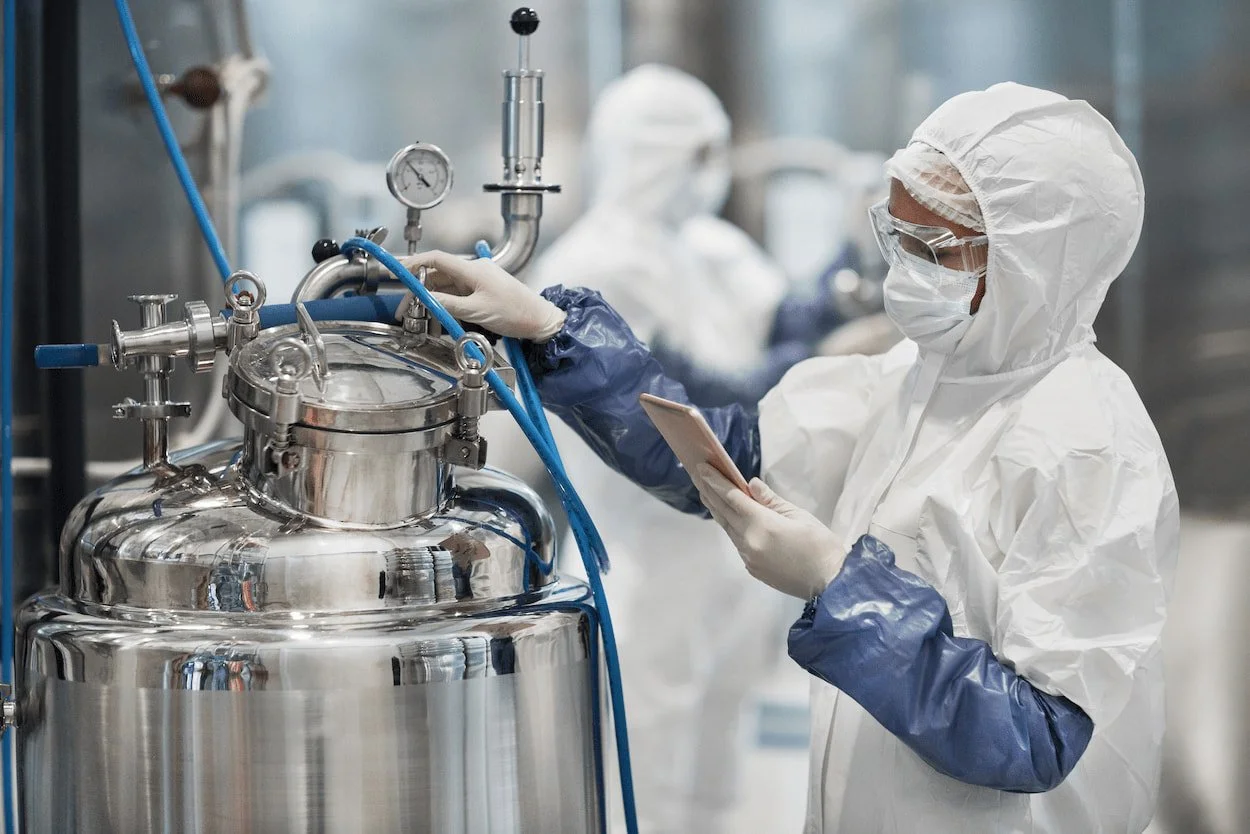
Most process engineering starts with the facility. The brief arrives as a building requirement – a number of square metres, a list of unit operations, a capacity target – and the engineering team designs a facility to house it. The process logic is taken as given. The result, reliably, is more facility than the process actually needs.
Bryden Wood starts with the process. Before a floor plate is drawn or a structural grid proposed, our process engineers interrogate the root manufacturing requirement: what is actually being made, in what volumes, through what sequence of operations, and with what constraints on quality, safety, and regulatory compliance. That interrogation almost always reveals significant opportunity: over-specified equipment, inefficient flow, unnecessary scale, that a facilities-first approach would have built in permanently.
This is Design to Value applied to process engineering. The desired outcome is not a building. It is a manufacturing capability – one that is right-sized, efficient, and designed to perform over its operational lifetime, not just to pass regulatory review at handover.
Our process engineering team brings deep expertise across pharmaceutical and biotech manufacturing, battery technology, and industrial sectors. Led by Adrian La Porta – a chartered chemical engineer with over 30 years' experience in biochemical and chemical processes, and formerly of GSK's global project development group – the team applies process simulation, digital modelling, and DfMA thinking to design manufacturing facilities that are leaner, more modular, and more adaptable than conventional approaches produce. Tanya Oram leads our ongoing Front End Engineering & Design programme with GSK across their global portfolio – a long-running engagement that applies DtV methodology to translate strategic business need into the right capital projects before scope is fixed.

The outcomes speak for themselves. At Pfizer's API manufacturing plant in Singapore – a flagship $1bn SGD facility delivered entirely during the COVID-19 pandemic – Bryden Wood's review and optimisation of the milling building concept design delivered a 30% reduction in capital cost and more than 50% reduction in operational CO₂ emissions. The project won the 2024 ISPE Facility of the Year Award for Operations and Project Execution, delivered ahead of schedule and under budget. At GSK's Attachment Inhibitor facility in Parma, our process-first approach delivered a life-saving HIV drug manufacturing facility in just 15 months from groundbreaking to handover, a timeframe GSK described as unprecedented, with zero reportable safety incidents. That project won the 2020 ISPE Facility of the Year Award for Social Impact.
The common thread across both projects is the same: start with what the process needs, model it digitally before committing to physical form, design for modularity and prefabrication wherever possible, and maintain a relentless focus on the manufacturing outcome rather than the building that houses it.
That principle is now extending into the future of pharmaceutical manufacturing itself. The batch processing model that has dominated small molecule API production for decades is increasingly inadequate – losing up to 40% of plant capacity to changeovers, using vessels optimised for none of the operations they perform, and producing facilities that dwarf the actual process volume they contain. The alternative: process intensification, continuous processing, miniaturised skid-mounted modular systems that can be factory-built and relocated, is the direction Bryden Wood's process engineering team is actively developing, in collaboration with clients and in published research.