
Sustainability: physics-led, proven performance
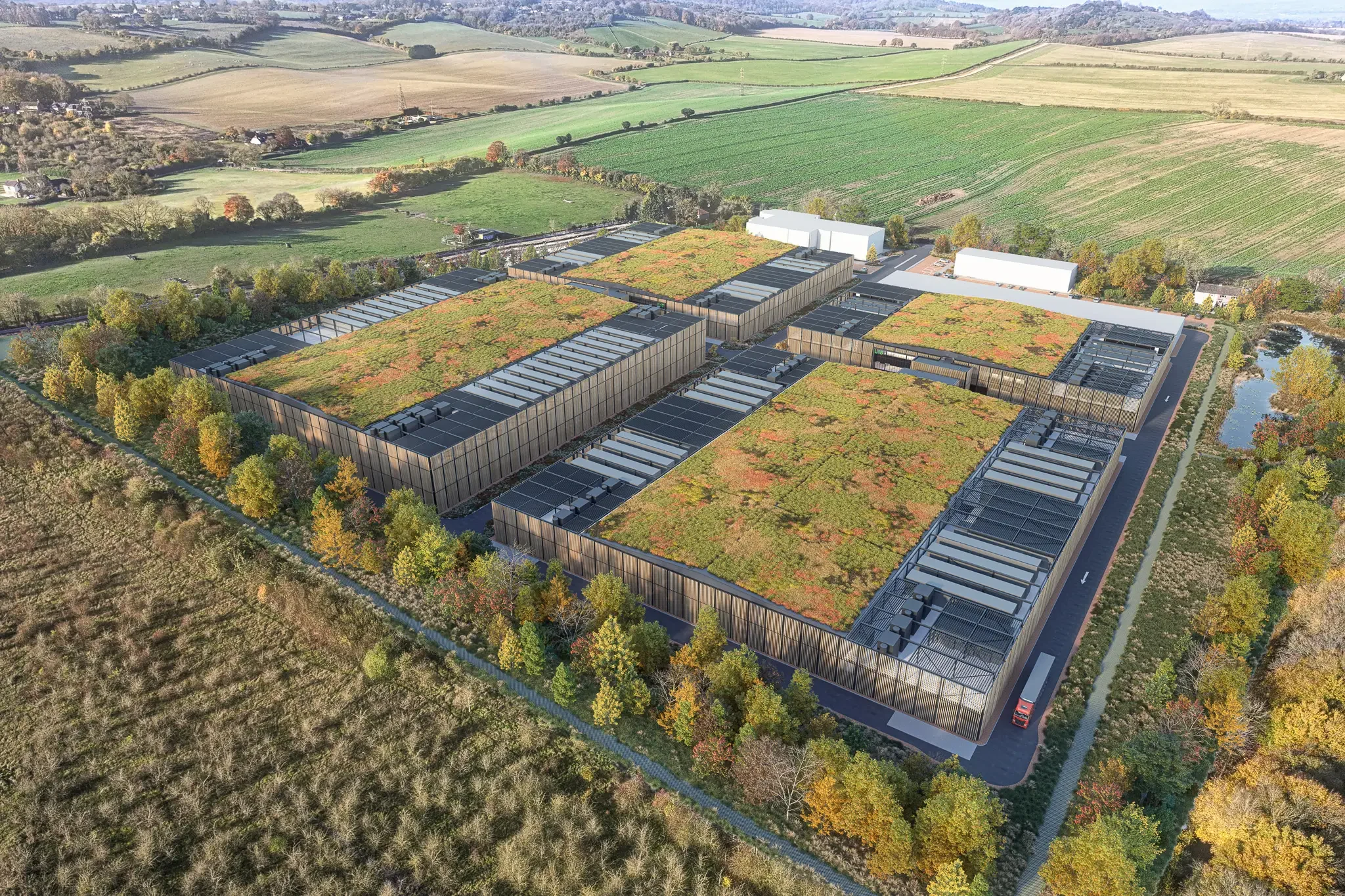
Embodied carbon represents two thirds of whole-life carbon in a commercial office building. Not operational carbon – embodied carbon. The carbon locked into the materials before a building is ever occupied. That single fact reshapes how Bryden Wood approaches sustainable design: if you want to deliver a genuinely low-carbon building, the decisions that matter most are made at the very beginning, not retrofitted at the end.
This is why sustainability at Bryden Wood is not a separate workstream or a compliance exercise. It is embedded in the Design to Value process from day one, part of the same analytical framework that drives decisions about structure, form, materials, systems, and procurement. Our sustainability and building physics team works alongside architects, structural engineers, and mechanical and electrical engineers from the outset of every project, not as a checkpoint at the end of the design process but as a core part of the team that shapes it.
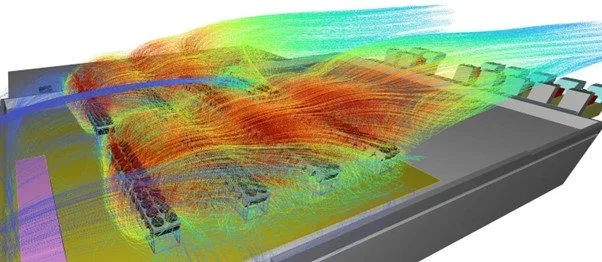
Building physics is the discipline that makes this possible. By modelling how a building gains and loses heat, how daylight penetrates and distributes, how air moves, and how energy flows, before a single element is specified, we can design buildings that perform. Not buildings that are predicted to perform, then adjusted post-occupancy, but buildings where high performance is a consequence of early design decisions made with rigorous analytical evidence. Computational modelling, thermal simulation, and CFD analysis are not outputs we produce at the end of a design process. They are inputs we feed in continuously, using a circular feedback loop that allows every discipline to understand the performance implications of their decisions as they make them.
The results of this integrated approach are demonstrable. At The Forge – Landsec's landmark commercial development and the world's first building delivered using a platform approach to DfMA – our sustainability-led design achieved a 39% reduction in upfront embodied carbon against a Business as Usual baseline, independently verified by Cundall on behalf of Landsec post-completion. In the superstructure specifically, the combination of P-DfMA methodology and low-carbon material specification delivered approximately 60% embodied carbon saving. The Forge is designed to meet the UKGBC definition of net-zero carbon in both construction and operation – the first commercial building in the UK to do so.
These outcomes are not exceptional. They are what happens consistently when industrialised construction thinking is applied from the start. P-DfMA reduces the quantity of material used, eliminates waste at source, enables local sourcing, and produces buildings that are designed for deconstruction and reuse rather than demolition. Fewer materials, less waste, lower carbon – not as targets to be offset against, but as consequences of designing well.
Our sustainability and building physics specialists bring a rigorous, science-based approach to every project. Their technical capabilities span operational energy and carbon analysis, embodied carbon and lifecycle assessment, circular economy studies, façade optimisation, daylight and solar analysis, thermal comfort and overheating assessment, BREEAM, LEED and WELL benchmarking, computational fluid dynamics, condensation analysis, and U-value calculations. These are not bolt-on services. They are how we ensure that every building we design performs as intended – for its users, for its owners, and for the environment – across its entire life.
Sustainability is not an ambition we hold separately from the rest of our work. It is a direct consequence of designing to value.
Next: Architecture
Previous: Process Engineering