It costs somewhere between $1.5 billion and $5 billion to bring a cancer drug to market. The process takes 15 to 20 years. The success rate is 4%. These are the numbers that PharosAI was created to challenge.
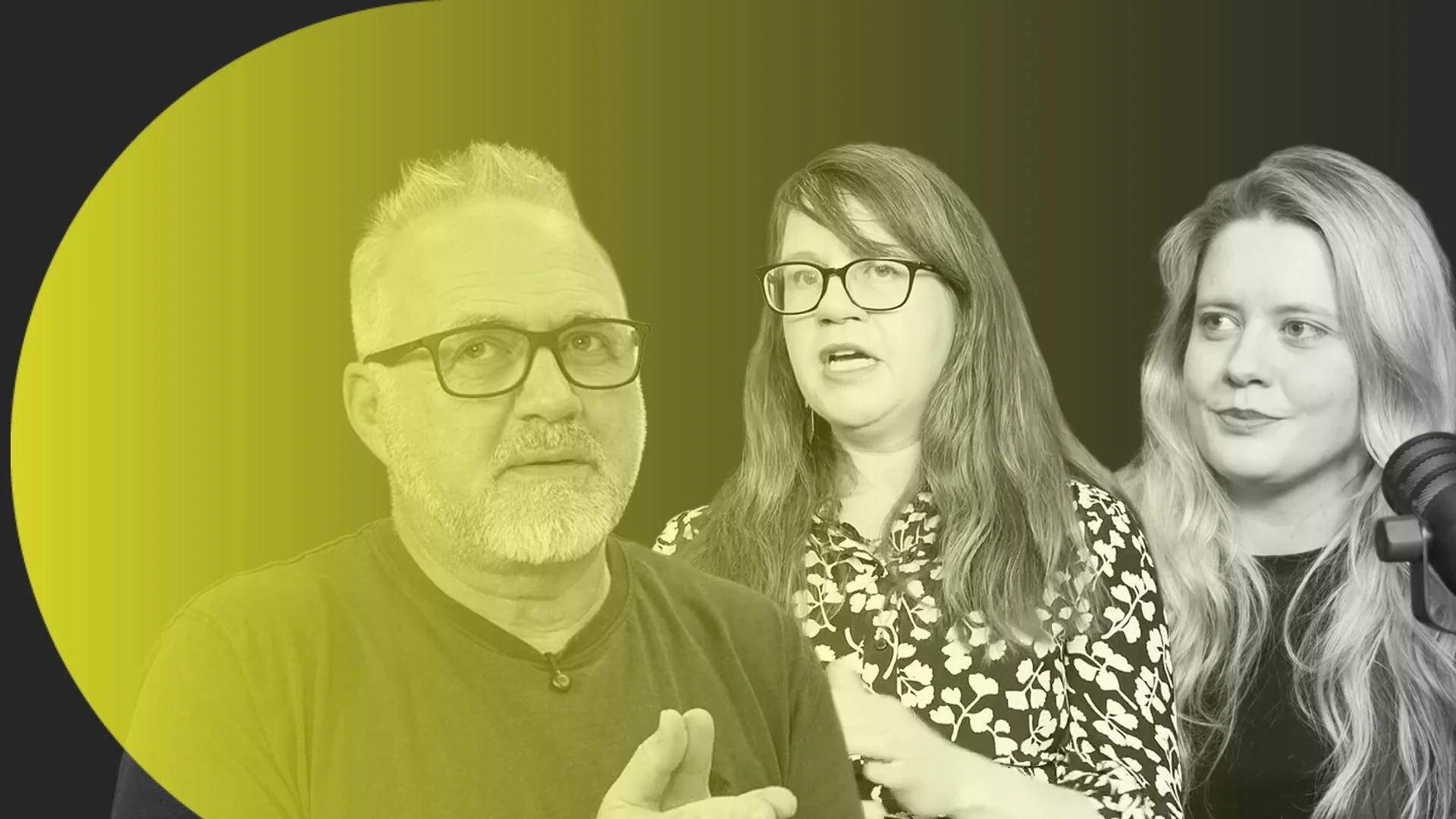
In this episode of the Bryden Wood Podcast, Technical Director Adrian La Porta is joined by Dr Lucie Burgess, Chief Operating Officer, and Dr Emma Colliver, Research Fellow, from PharosAI – a partnership between King's College London, Queen Mary University of London, Guy's and St Thomas' NHS Foundation Trust, and Barts Health Trust.
What PharosAI does:
PharosAI takes tissue samples donated by cancer patients through the NHS diagnostic pathway and creates multimodal, AI-ready datasets – whole genome sequences, RNA sequences, spatial transcriptomics, whole slide images, and linked electronic health records. These datasets are then made available on a secure platform for pharma companies, biotech startups, digital pathology companies, and academic researchers to use in developing new drugs, therapies, and diagnostics.
The critical distinction is that PharosAI does the expensive upstream work of curating these datasets once – going deep on breast, lung, and pancreatic cancers to start – so that smaller companies and research groups can access them without bearing the cost and risk themselves. The goal is to democratise access to the kind of data that AI models need, lowering the barrier of entry for UK biotech and drug discovery.
Where AI is already landing
Emma is precise about where the evidence stands. In diagnostics, the case is strong – 80% of FDA and CE-approved AI medical devices are in the radiology space, and a new generation of digital pathology companies are already developing clinical applications in use within NHS trusts. In drug discovery, AI-designed drugs are now in clinical trials, and the early phases of discovery have demonstrably accelerated – but the clinical readouts that would prove AI has fundamentally changed the failure rate have not yet arrived.
What is not in doubt is AI's capacity to find patterns in datasets too complex for human analysis. The whole slide images that pathologists currently diagnose by looking down a microscope are 11 gigabytes each. At a time in the NHS when only 3% of pathology labs are fully staffed, that kind of automation is not optional – it is essential.
Data governance and federated learning
PharosAI operates under the Human Tissue Act, which requires explicit patient consent for every tissue sample – a higher bar than the opt-out model used by the broader UK Health Data Research Platform. The team has also established PIVOT – the Patient Involvement Voice and Outreach Team – to ensure patients are consulted on attitudes to AI, commercialisation, and the sustainability model.
The most technically distinctive element of the architecture is federated learning – a privacy-preserving approach in which AI models are moved to the data rather than data being moved to a central repository. Patient data stays behind the trust firewall; only model parameters travel. If the approach works at scale, it provides a template for how biobanks and trusts across the UK could collaborate on AI research without centralising sensitive patient data.
Synthetic patients
One of the episode's most striking moments comes when Lucie explains synthetic patients – AI-generated patient profiles based on real data that can replace the control arm of a clinical trial entirely, allowing every real patient to receive the experimental treatment rather than a placebo or standard care. For patients who have already failed standard treatments, this is not a technical convenience. It is a genuinely humane application of AI in cancer care.
Why it matters personally
Both guests close the episode with disclosures that give the work its weight. Lucie's parents both died of cancer – her father of acute myeloid leukaemia in 2019, her mother of pancreatic cancer in 2023, diagnosed too late because the symptoms came too late. Emma grew up without her father, who died of cancer when she was four, and her mother is on a cancer journey now. These are not abstract research motivations. They are the reason this work exists.
Adrian La Porta is Technical Director at Bryden Wood. Dr Lucie Burgess is Chief Operating Officer at PharosAI. Dr Emma Colliver is a Research Fellow at PharosAI.