
Civil Engineering: integrated from the ground up
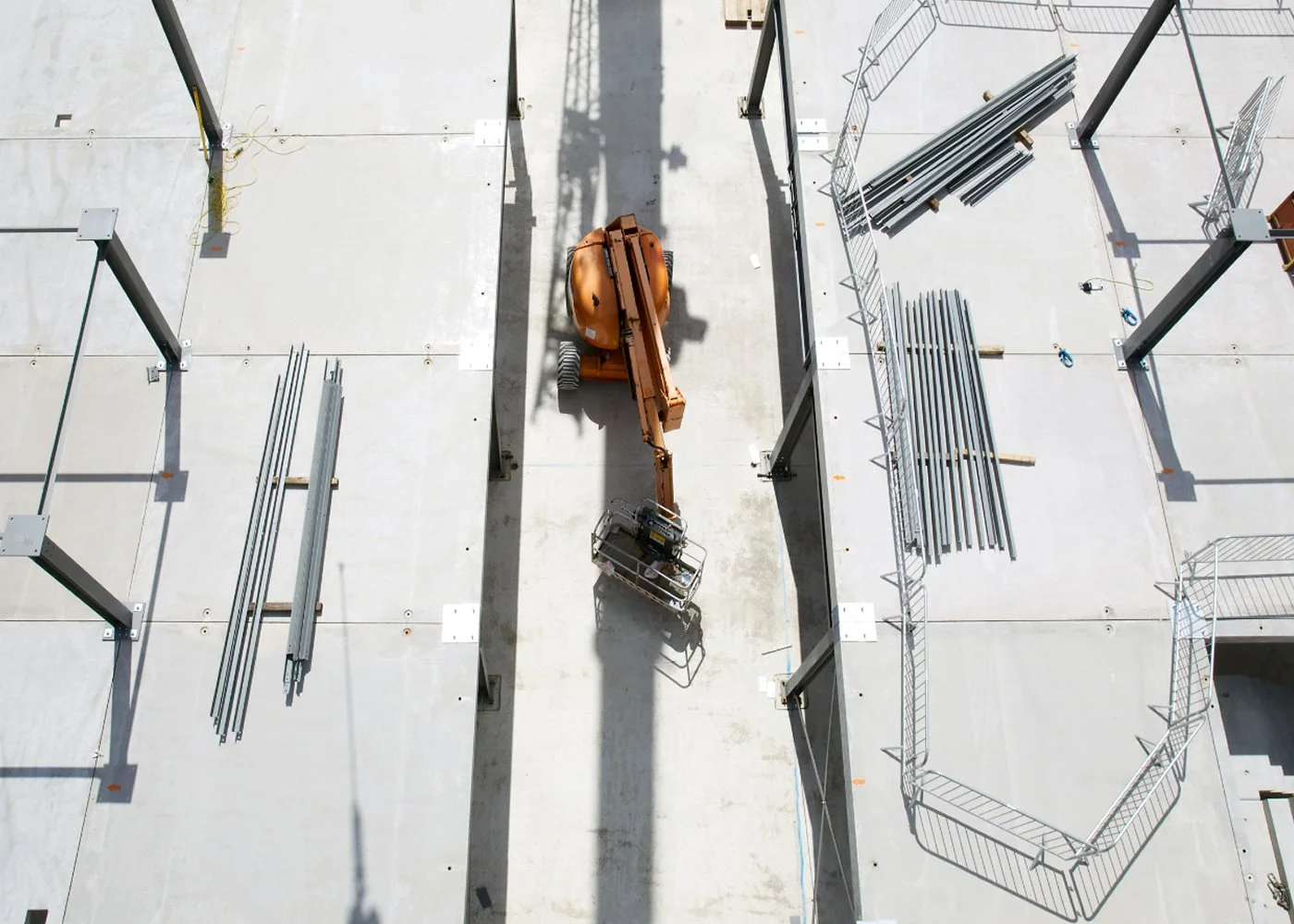
Civil engineering is the infrastructure that everything else depends on. Before a building can rise, the ground beneath it must be understood: its drainage, its utilities, its load paths, its environmental constraints. Get this wrong and no amount of elegant design above ground will save you. Get it right, and the entire project is set up to succeed.
At Bryden Wood, civil engineering is not a separate discipline bolted on to a project. It is integrated from the outset – part of the same transdisciplinary team that is thinking about structure, architecture, building services, and digital delivery simultaneously. Our civil engineers bring the same Design to Value logic to below-ground and external works as we apply to everything else: start with what the project actually needs to achieve, then design the most efficient, sustainable, and buildable solution to get there.
This integration changes what is possible. When civil, structural, and building services engineers are working from the same model and the same problem statement from day one, the interfaces between disciplines are resolved in design rather than on site. Drainage strategies inform structural foundation choices. Utility layouts are coordinated with building services from the start. External works are designed as part of the project's overall sustainability and logistics strategy, not as an afterthought. The result is fewer surprises, fewer delays, and less waste across programme, cost, and carbon.
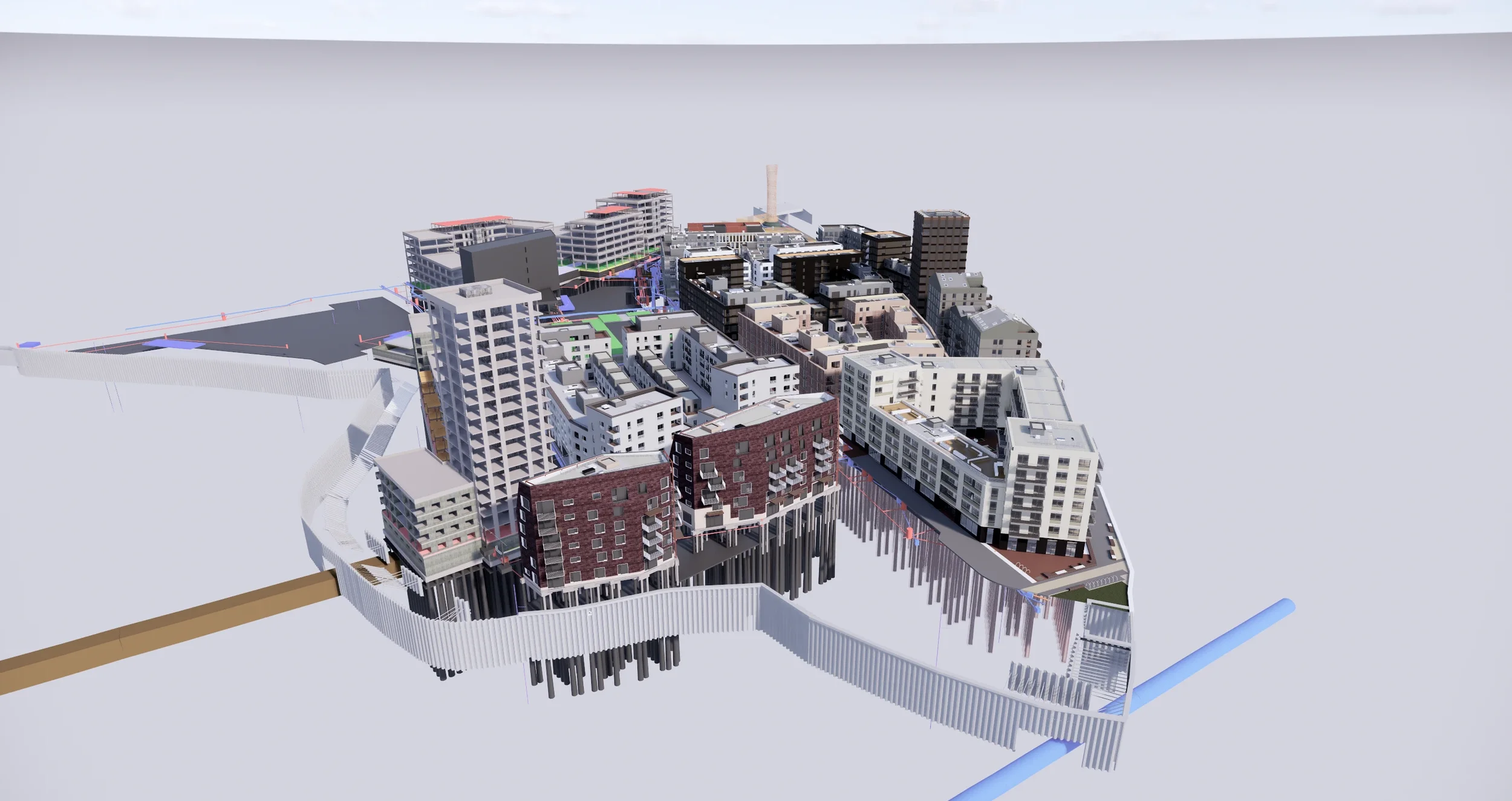
Our civil engineers are experienced across the full range of below-ground and external design: drainage and sustainable urban drainage systems, earthworks and cut-and-fill balancing, utility design and diversions, transportation and access, and environmental assessment and constraint management. We work across sectors: commercial, residential, healthcare, airports, and data centres, where below-ground utility complexity is among the most demanding we encounter anywhere.
We use advanced BIM-compliant modelling to coordinate all below-ground assets, visualise spatial arrangements, and resolve potential clashes before physical works begin. Combined with our automation capability – bespoke digital tools that accelerate optioneering and reduce design time – this gives our civil engineering team a precision and efficiency that traditional approaches cannot match.
The measure of good civil engineering is that it disappears into the project. When the drainage works, the utilities are coordinated, the ground conditions are properly understood, and the external realm is well-considered, nobody notices. That is exactly what we aim for.
Next: Mechanical + Electrical Engineering
Previous: Structural Engineering