

DfMA *for battery plants* \\ Adam Jordan
Gigafactories are among the most complex and time-critical buildings in the world. Adam Jordan, Bryden Wood's Asia-Pacific Lead, examines how DfMA can reduce cost and programme by 30% or more – and why getting the design right before prefabricating anything is the critical first step.

*The future of laboratories* | Accelerate Laboratories round table report: \\John Dyson
Laboratories underpin everything from cancer research to vaccine development – yet they remain largely invisible in conversations about industrial transformation. Bryden Wood convened leaders from across the sector to ask what the laboratory of the future looks like, and what it will take to get there.
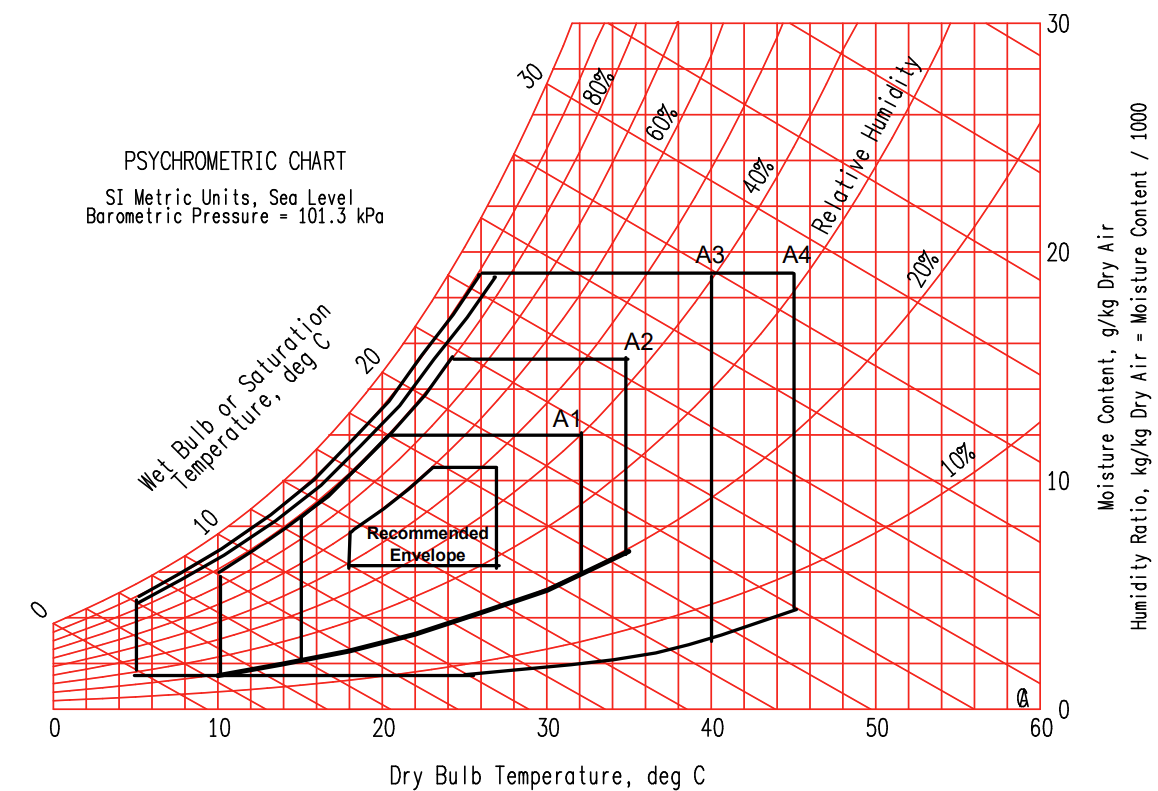
Heat rejection in data centres: * the path to optimisation* \\Robin Underwood
How you reject heat is one of the most consequential decisions in data centre design – affecting PUE, water consumption, footprint, and long-term flexibility. Robin Underwood examines the options, the trade-offs, and what the shift to liquid cooling means for heat rejection systems going forward.
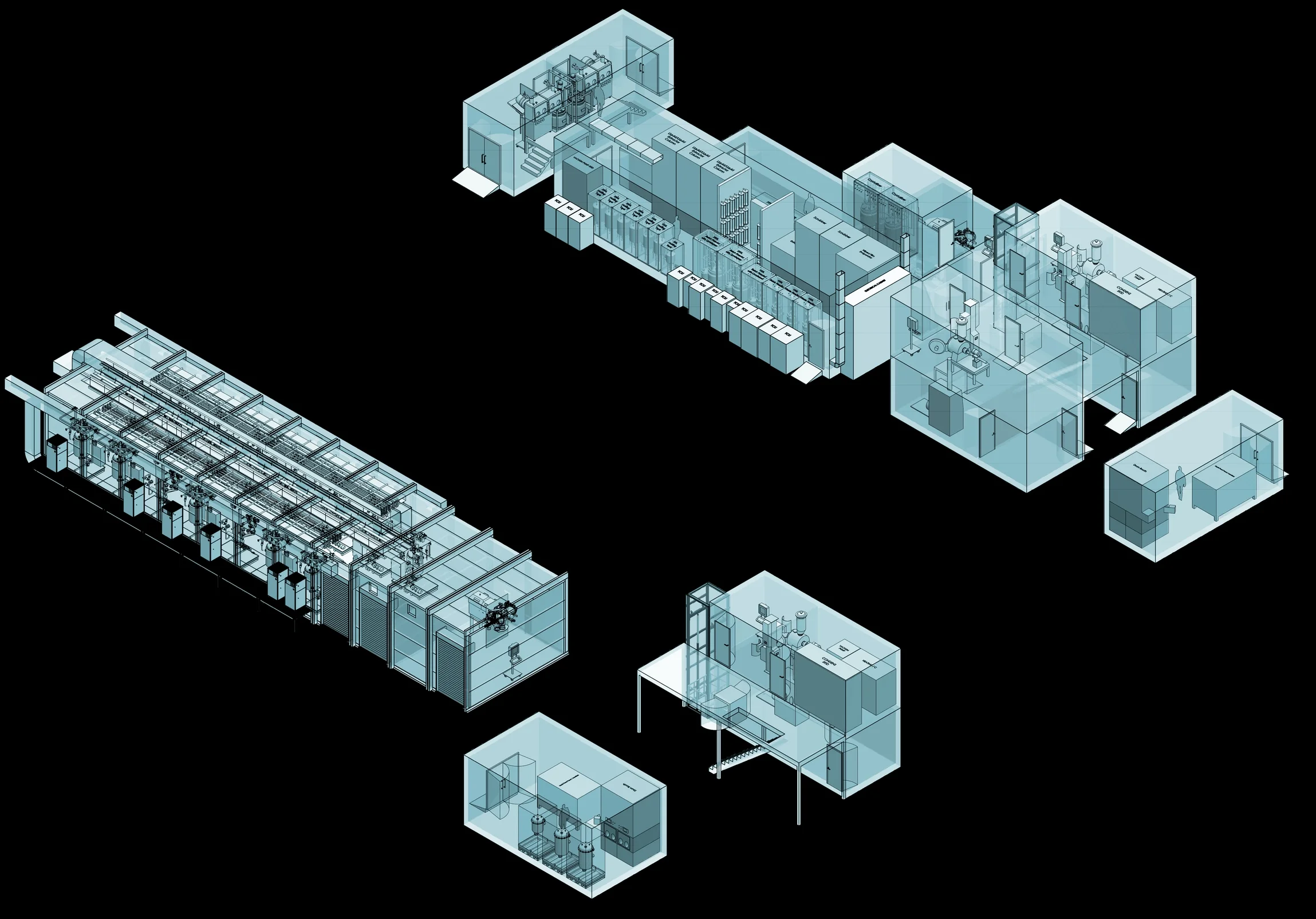
Pharma’s conundrum: designing beyond concept – Part 2: *Ensuring value through integrated project delivery* \\The Dyson blog
How do you stop a great pharmaceutical project concept from being ground down by the delivery process? In Part 2 of Pharma's Conundrum, Professor John Dyson sets out the principles of Integrated Project Delivery – and why shared value, not scope management, is the real measure of success.
Pharma’s conundrum: designing beyond concept – Part 1: *Productive iteration* \\The Dyson blog
The pharmaceutical industry assumes that once a project concept is agreed, iteration is a risk. Professor John Dyson argues the opposite – that emergence in design is inevitable, and that pretending otherwise destroys value. Part one of his Pharma's Conundrum series sets out a smarter approach to scheme design.

*Transforming value in the pharmaceutical industry* | Accelerate Pharmaceuticals – Part 2: \\The Dyson blog
Process intensification, modularity, and automation could deliver billions in improved cash flow and drive pharmaceutical manufacturing close to net zero. So why isn't the industry moving faster? Professor John Dyson reports on what happened when four of the world's largest pharma companies came together to ask that question out loud.
*The grand hotel of value* | Accelerate Pharmaceuticals – Part 1: \\The Dyson blog
Place matters more than most people think. Professor John Dyson argues that the environment where collaboration happens – its architecture, aesthetics, and culture – carries far more weight than the agenda. The Grand Hotel of Value is his answer to a problem the pharmaceutical industry hasn't yet named.
Accelerating *new technologies* \\Martin Wood
We're not short of new technologies. We're short of the ability to deploy them at the speed the world needs. Bryden Wood co-founder Martin Wood, Professor John Dyson, Adrian La Porta and colleagues introduce Accelerate – a programme for convening the people who can close the gap between research and realisation.

Escaping the devil's snare: *pioneering sustainable and innovative approaches in construction* \\The Dyson blog
The Devil's Snare binds tighter the more you struggle. Professor John Dyson argues this is precisely what the construction and pharmaceutical industries are doing – and that the way out is not more effort in the same direction but the courage to try something genuinely different.
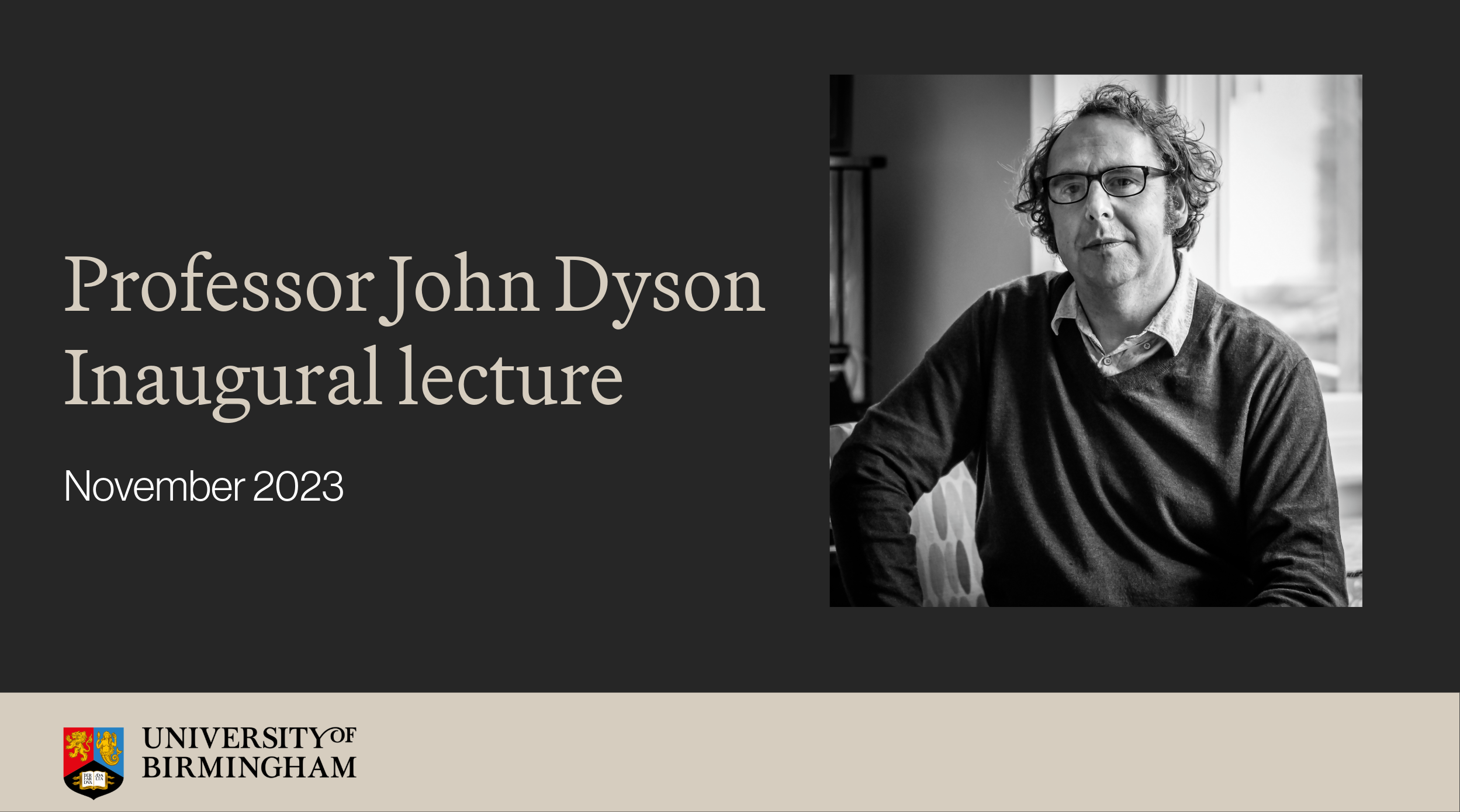
Professor John Dyson's inaugural lecture – *In search of treasure and redemption* \\John Dyson
From building sites in his teens to VP at GSK, Professor John Dyson has spent his career watching purpose get lost in the machinery of delivery. His inaugural lecture at the University of Birmingham is his most expansive argument yet for why that has to change.

Adjusting our *ambition* \\The Dyson blog
Personal guilt about climate change is understandable but insufficient. Professor John Dyson argues that what this moment demands is not hair shirts but the kind of leadership that built Spitfires in a Newbury carpentry workshop – ambition, ingenuity, and the determination to do things that have not been done before.

Fostering humility and focusing on people and *purpose in collaborative design processes* \\The Dyson blog
The coronation of King Charles III contained an unexpected lesson in collaborative design. Professor John Dyson argues that the symbolic act of divestment – stripping away rank, title, and certainty – is exactly what is required to create the conditions where genuinely creative, purpose-led design can flourish.

Defining *Reference Design* \\ Jaimie Johnston MBE
Major clients with national or global rollouts shouldn't have to start from scratch on every site. Director Jaimie Johnston MBE explains Reference Design – Bryden Wood's approach to developing a highly optimised, site-agnostic core design that can be configured, scaled, and industrialised across an entire programme.

Artificial and *human intelligence* \\The Dyson blog
From HAL in 2001: A Space Odyssey to Stuart Russell's Reith Lectures, Professor John Dyson has been thinking about artificial intelligence for decades. In this blog he argues that the ethical principles required to keep AI safe are exactly the same principles that Design to Value has always applied to projects.

Using curiosity to weave *a new perspective* \\The Dyson blog
Curiosity, argues Professor John Dyson, is the escape from the black-and-white thinking that keeps industries stuck. In this blog, he traces a line from the therapy room to synthetic aviation fuel – and arrives at a sobering but energising calculation about the scale of the fourth industrial revolution.

Values we hold to + *value we can create* \\The Dyson blog
Tevye in Fiddler on the Roof knows how to flex his values under pressure — and when to hold firm. Professor John Dyson finds in this story a precise model for how organisations, designers, and project teams can navigate change without losing what matters most.

Design to Value: *built assets that deliver on all fronts.* \\ Mark Bryden
Capital cost and return on investment don't define how well a built asset functions in the world. Mark Bryden explains how Bryden Wood's Design to Value methodology looks at the full picture – and why that approach consistently delivers better outcomes for clients and the built environment.

Design to Value and *the environmental emergency* \\The Dyson blog
After COP 27 failed to agree further CO2 reductions, Professor John Dyson sat down to write an angry blog and then slept on it. What came back was a simple but powerful realisation: the environmental emergency doesn't require us to give things up. It requires us to find the 'ands'.

The Value landscape and *engagement* \\The Dyson blog
Before you design anything, you need to understand who values what – and why those values might conflict. Professor John Dyson introduces the value landscape: a structured way of mapping stakeholder needs that can reveal fundamental tensions in a project long before they become expensive problems.

The power of uncertainty: *the challenging path from purpose to project* \\The Dyson blog
The instinct to reach for certainty at the start of a project is almost universal – and almost always wrong. Professor John Dyson draws on Viktor Frankl and General Stockdale to argue that living with uncertainty is not a weakness but the precondition for genuinely valuable design.