London Data Centre Campus
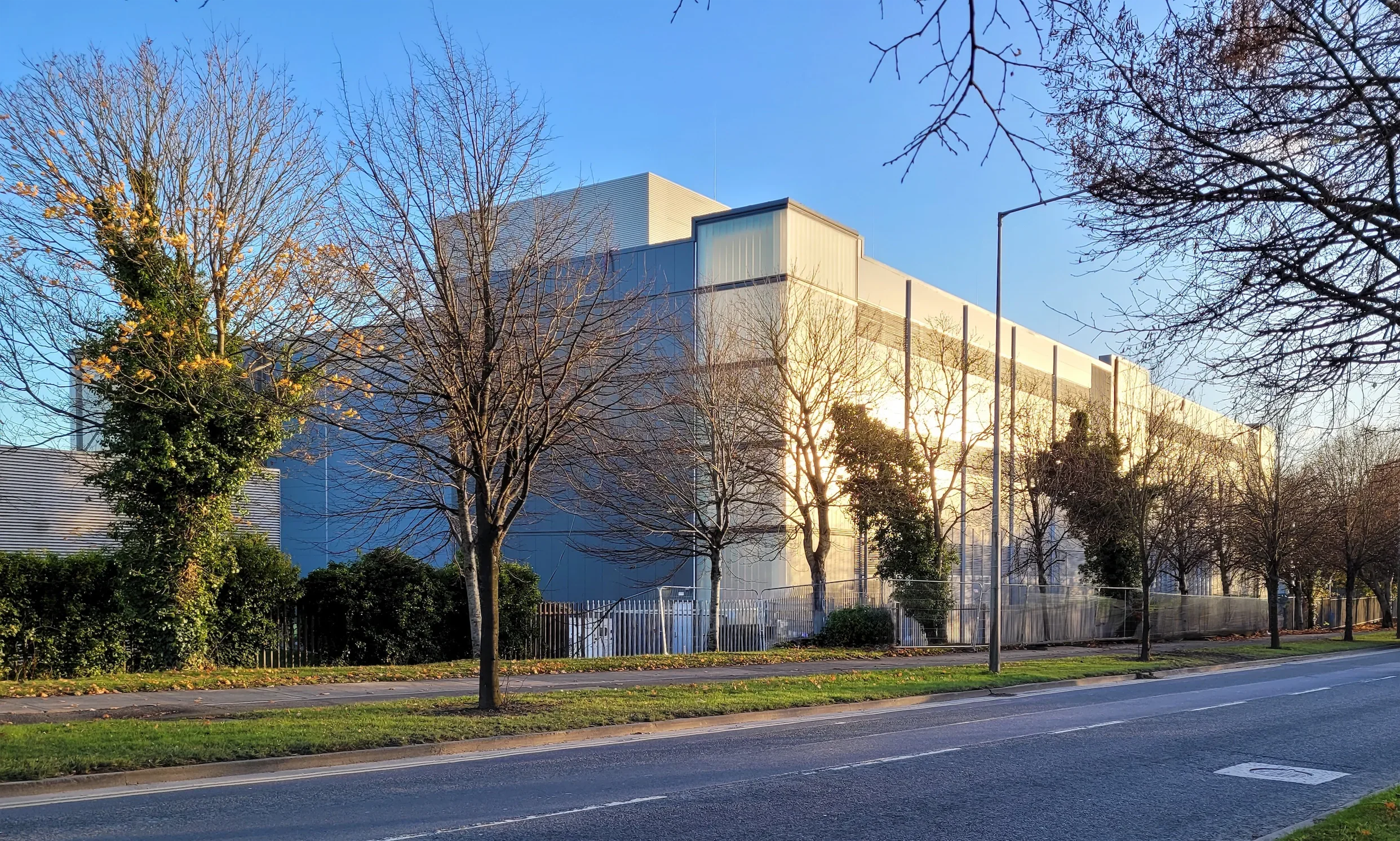
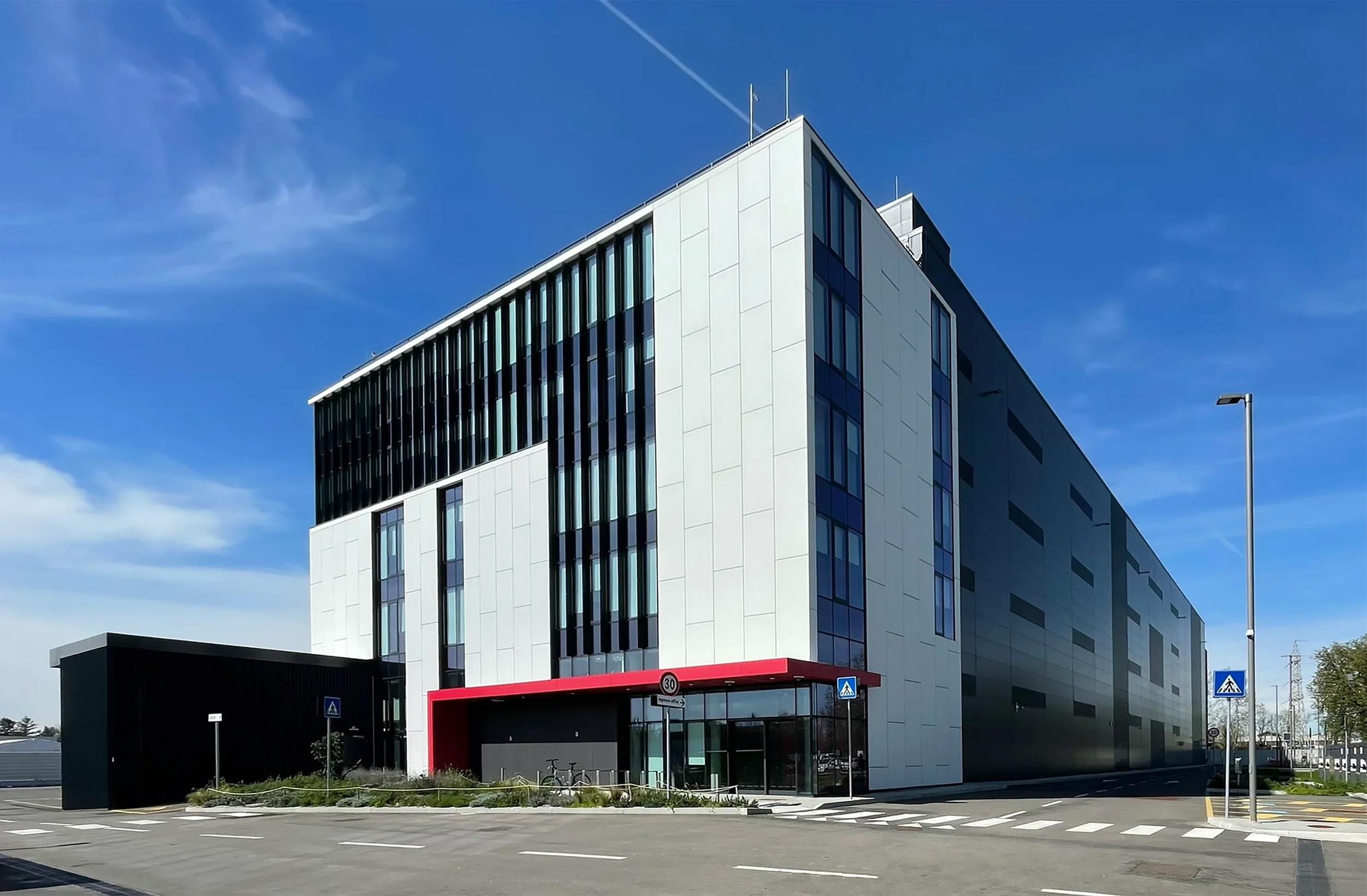
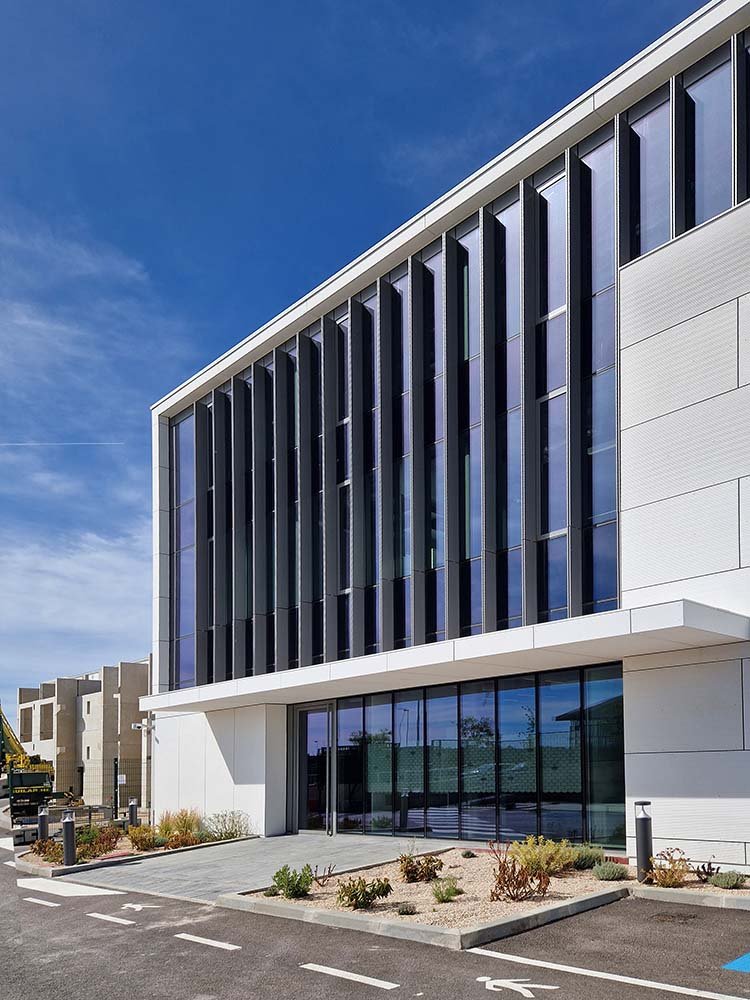
Bryden Wood has successfully delivered a major data centre facility in Slough, London, representing a total investment of €102 million.
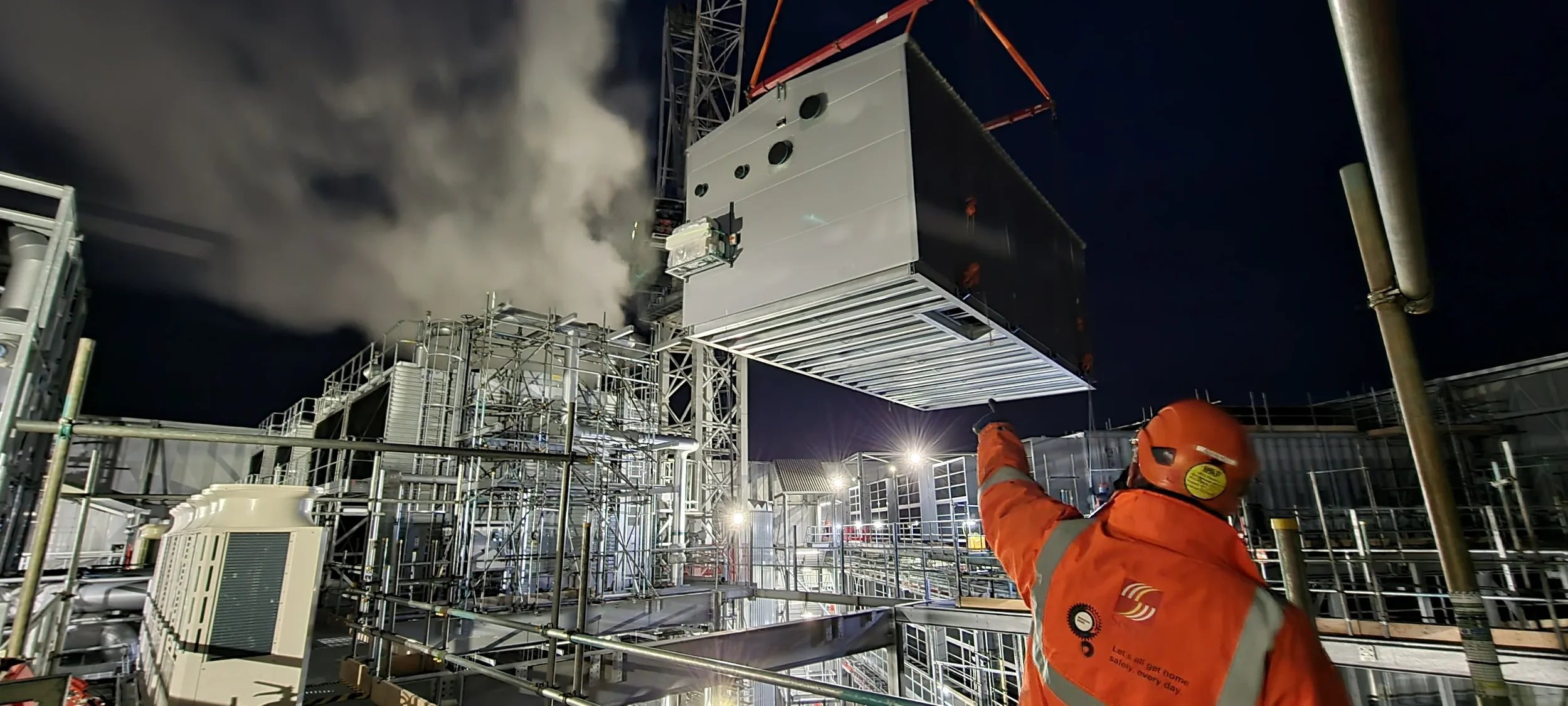
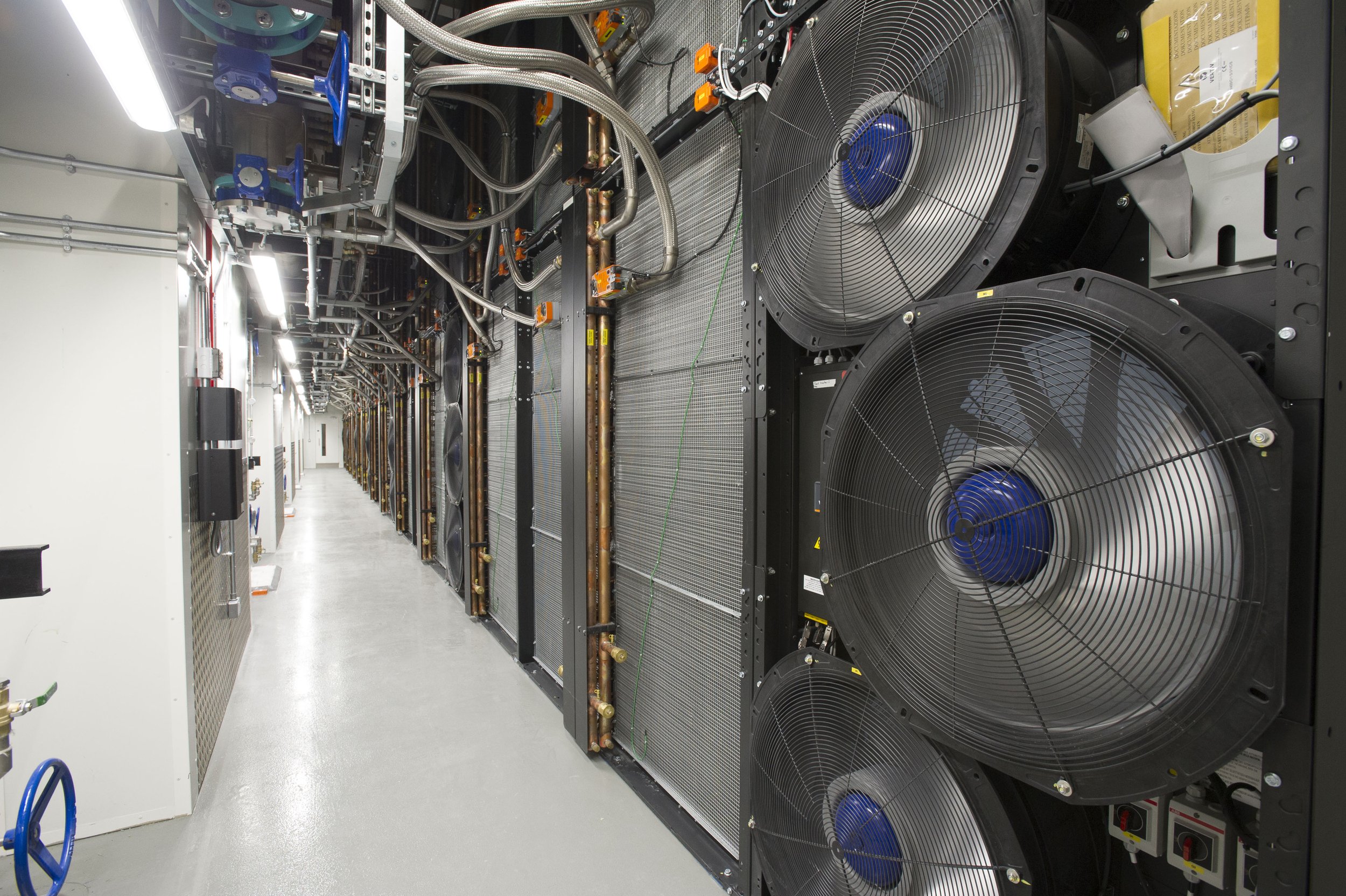
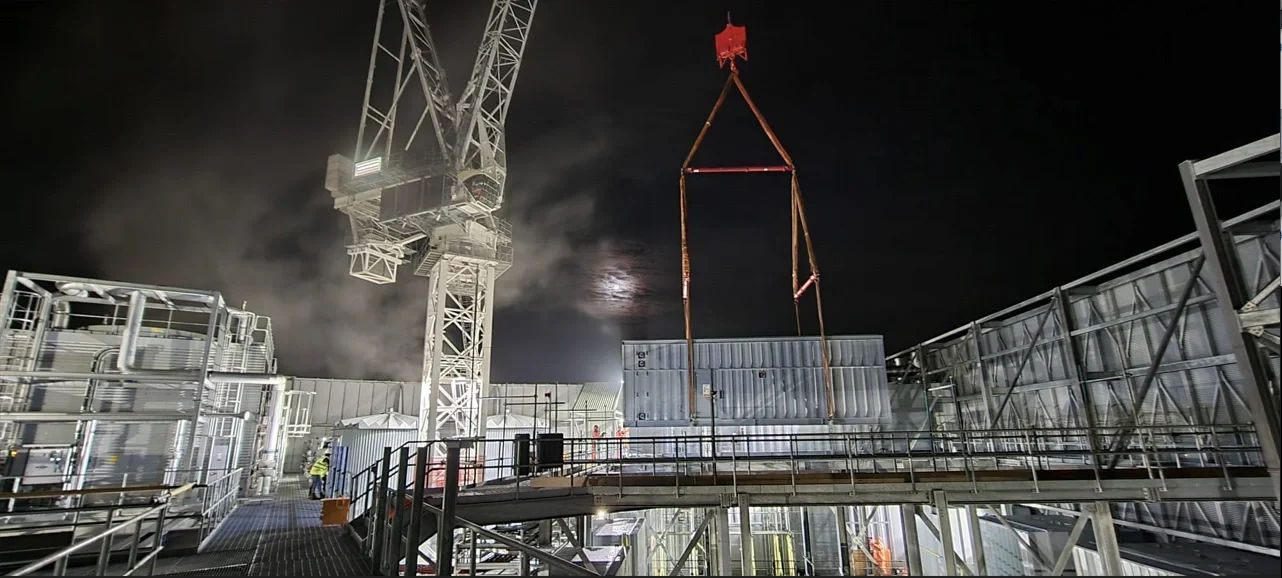
Bryden Wood managed the entire project lifecycle from RIBA Stage 0 through to Stage 7 – from strategic definition to live operation – across a delivery period of 2018 to 2021. The project brought together a multidisciplinary team across architecture, civil, structural, and MEP engineering, working within one of the most geometrically constrained sites the team has encountered to deliver a resilient, high-density digital infrastructure asset representing a total investment of £102 million.
Project details:
-
-
-
The site presented three overlapping constraints rarely found together: a geometrically compressed plot, an evolving client Reference Design not yet finalised at the point of engagement, and the need for full regulatory compliance throughout.
The spatial solution was a repurposed warehouse on an adjacent plot – housing Front of House, Back of House, and a new substation, connected to the main data halls via a link corridor – which unlocked an exceptional power yield and high MW/sqm ratio within the plot's strict boundaries.
Phased delivery – Shell and Core first, then two fit-out phases – brought the facility to operational readiness ahead of what a sequential programme would have allowed.
The result: a 21MW facility delivered on a £102 million investment, on time, on one of the most constrained urban data center sites Bryden Wood has worked on.
Spanning a delivery period between 2018 and 2021, our involvement showcased a comprehensive scope, encompassing the entire project lifecycle from RIBA Stage 0 (Strategic Definition) through to RIBA Stage 7 (Use and Operation).
The project involved a highly collaborative, multidisciplinary team overseeing architecture, civil engineering, structural engineering, and MEP services to deliver a resilient digital infrastructure asset.
The development is defined by a three-storey data centre designed to maximise capacity on a geometrically compressed and challenging site. A key architectural strategy involved the repurposing of an existing warehouse on an adjacent plot to house remote Front of House (FOH) and Back of House (BOH) facilities, as well as a new substation. These ancillary functions are seamlessly connected to the main data halls via a link corridor, with external plant areas strategically positioned to the West. This creative spatial planning was critical in achieving an exceptional power yield and high MW/sqm ratio despite the strict physical boundaries of the plot.
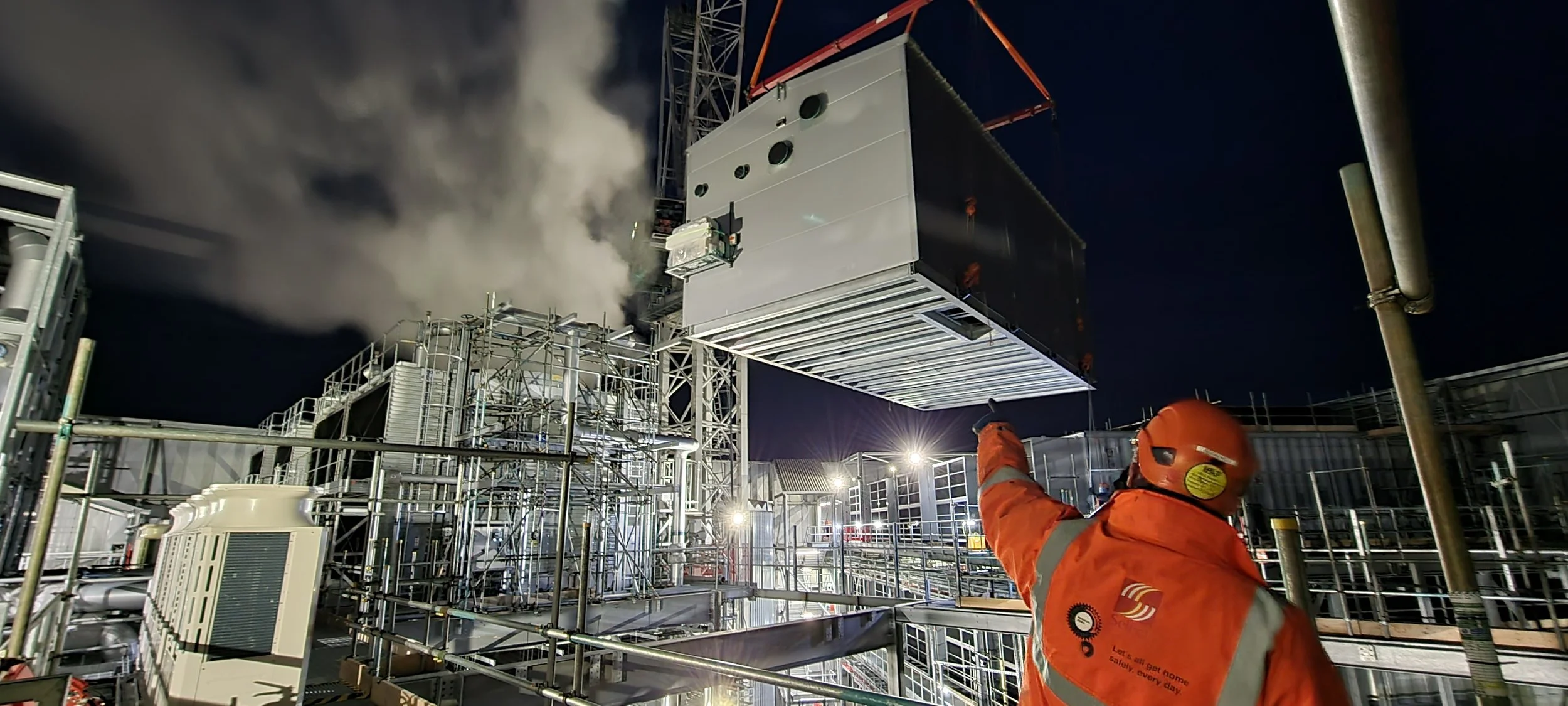
The planning strategy was streamlined under the Simplified Planning Zone (SPZ) framework, a tool utilised to facilitate and accelerate planning applications within the council’s industrial estates. This approach supported a rigorous phased delivery model. Construction began with the completion of the full Shell and Core to establish the primary envelope, followed by two distinct internal fit-out phases. This sequencing allowed for an optimised construction programme and earlier operational readiness.
A significant complexity of this project was the timing; the client was in the process of developing a new version of their Reference Design which was not yet finalised. This, combined with the severe site constraints, required major deviations from standard prototypes. Bryden Wood’s deep specialism in Design for Manufacture and Assembly (DfMA) and advanced spatial coordination proved vital. We adapted the emerging Reference Design to ensure regulatory compliance while solving complex geometrical clashes, ensuring the successful delivery of a high-density facility.
High levels of collaboration were established between all stakeholders, specifically between Bryden Wood and the appointed General Contractor. This seamless communication facilitated rapid problem solving and fast delivery on site.