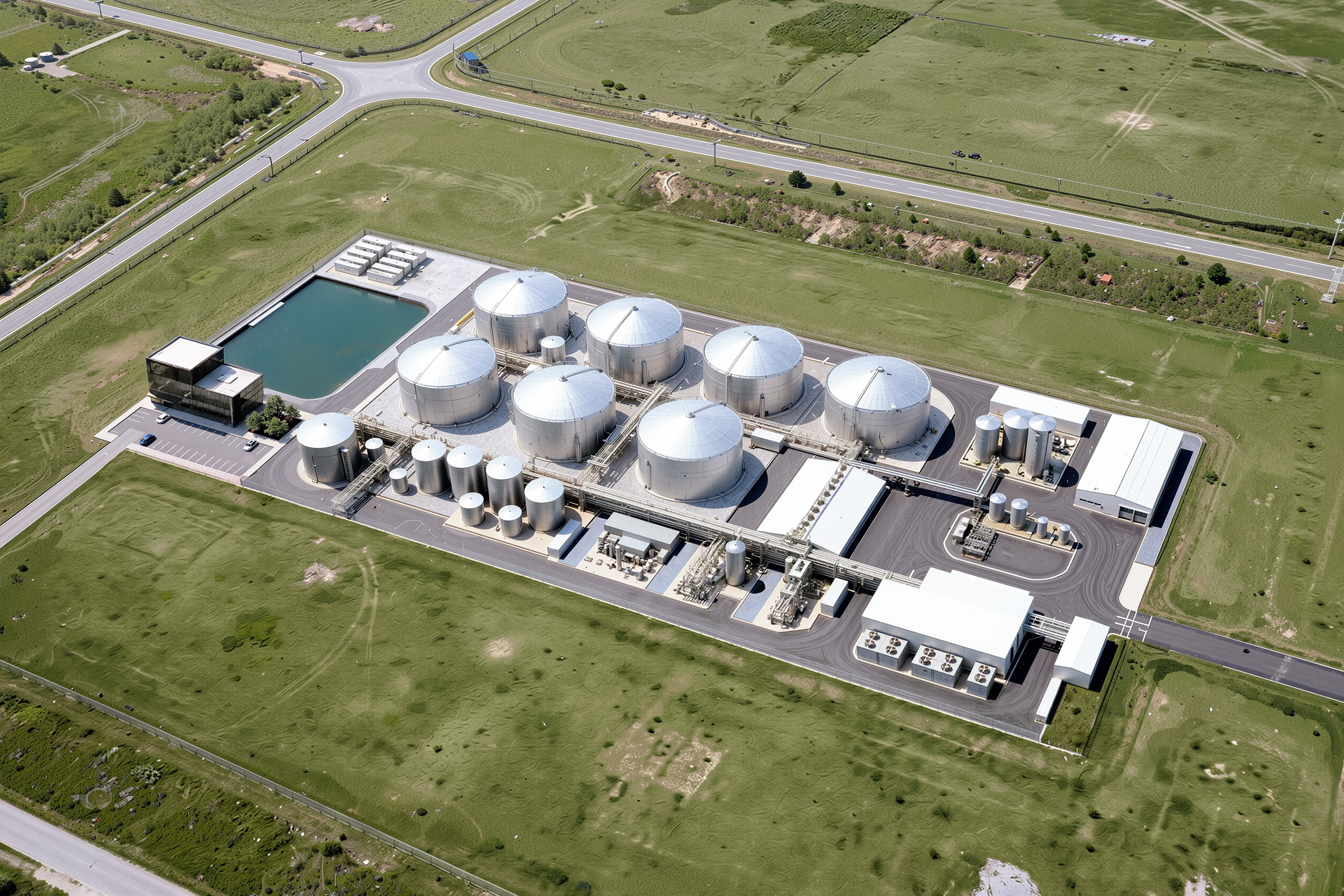
A site-agnostic, scalable biorefinery design, engineered to turn agricultural feedstocks into Sustainable Aviation Fuel.
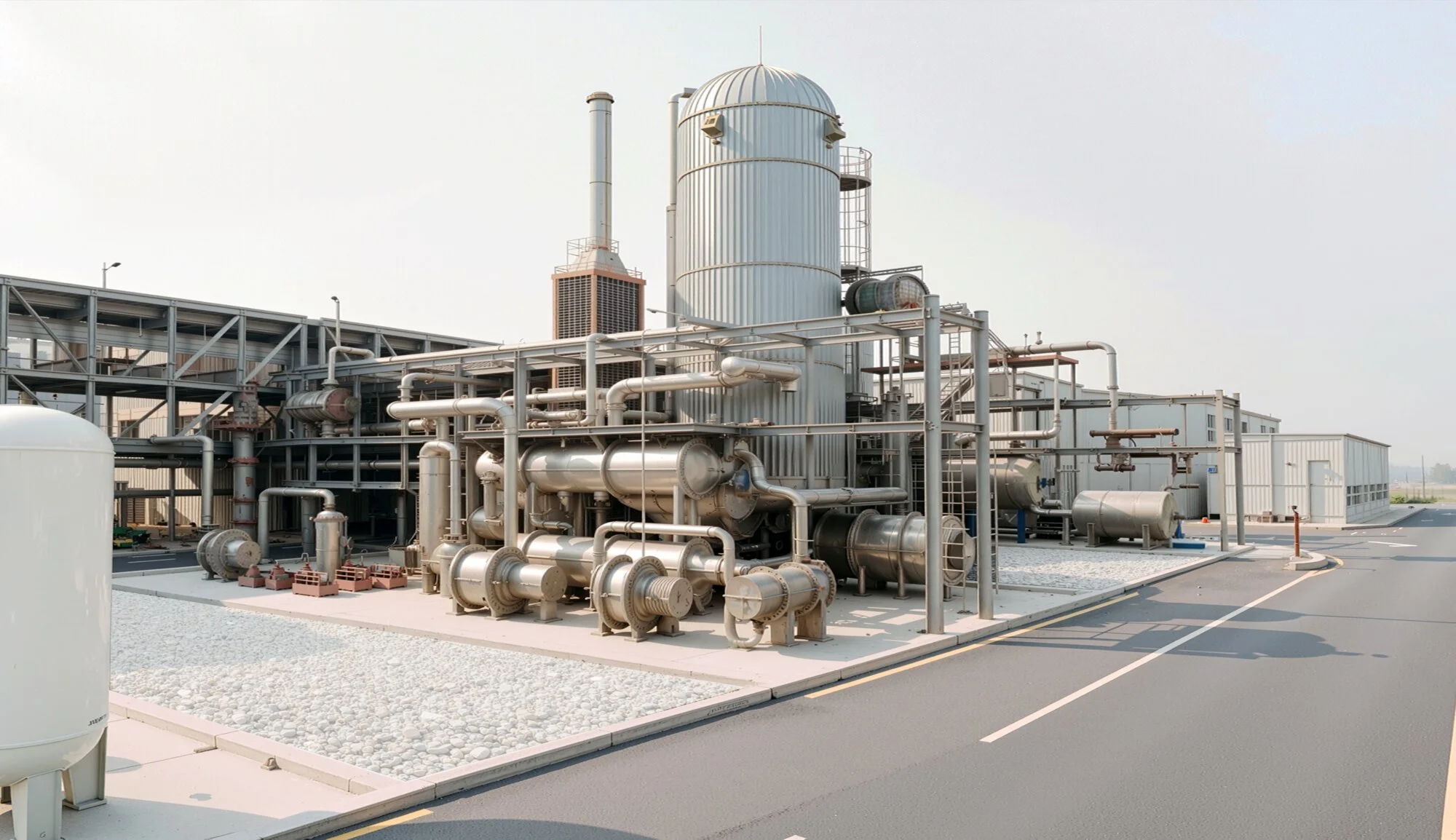
Bryden Wood was appointed to deliver an enhanced FEL-2 study for a first-of-a-kind commercial biorefinery designed to produce ketones for conversion to Sustainable Aviation Fuel (SAF). BioVeritas has developed a proprietary process and technology platform centred on an anaerobic digestion process capable of producing SAF from agricultural feedstocks and aims to scale commercial production across multiple sites to meet growing demand for sustainable fuels.
Project details:
-
-
-
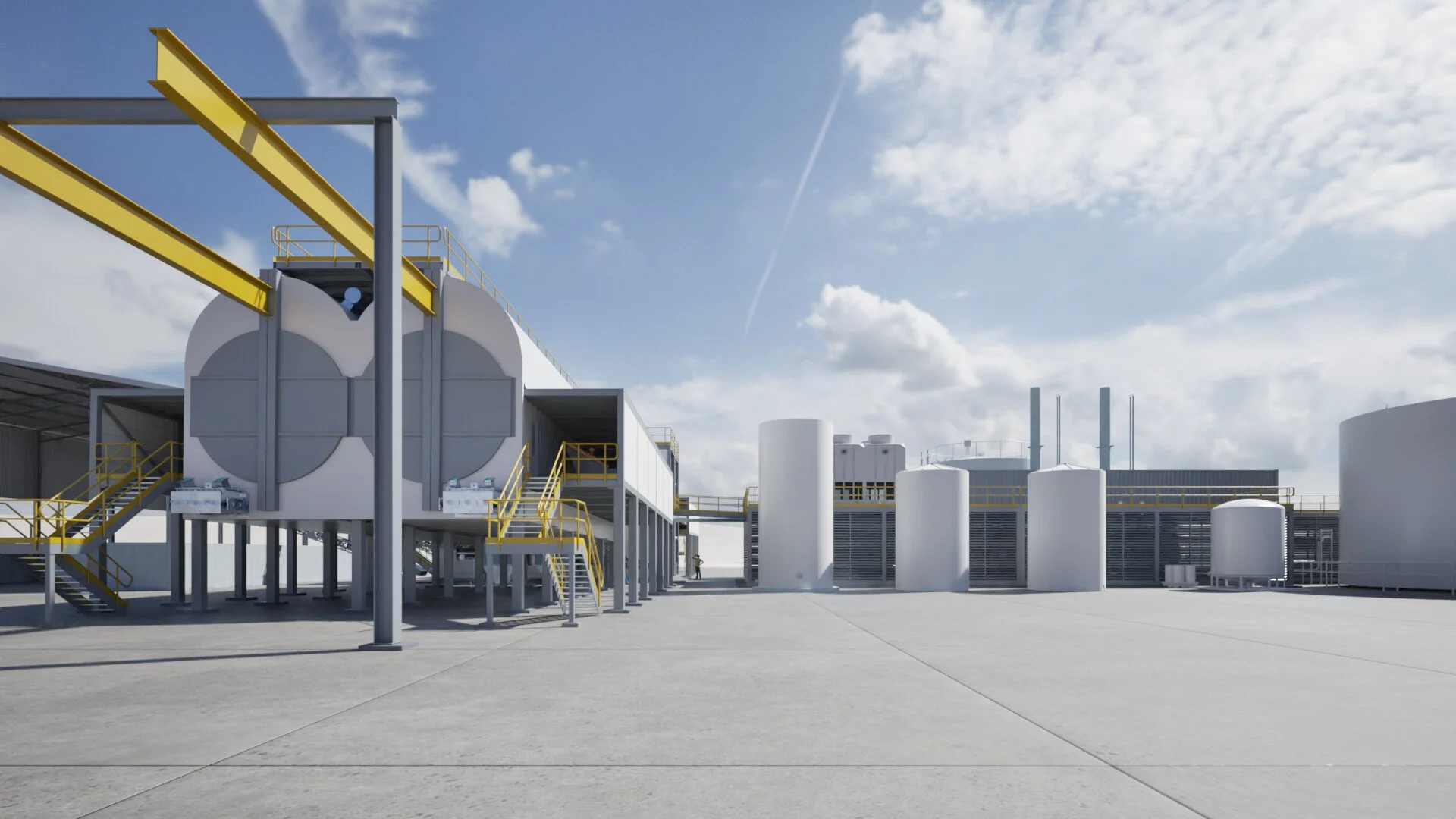
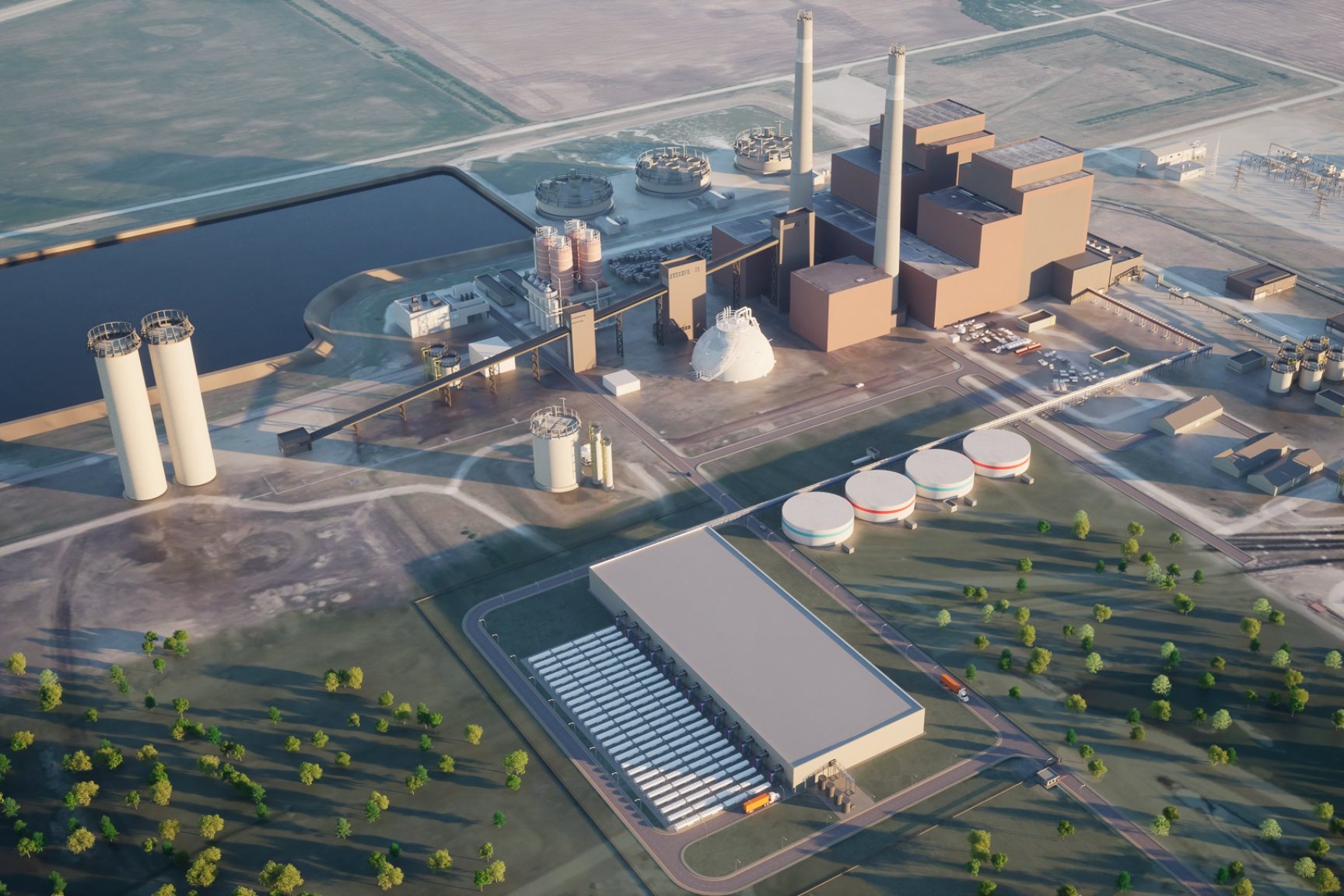
Bryden Wood designed a site-agnostic, economically attractive and scalable facility, integrating modularisation and productisation principles to deliver a 70% site footprint reduction compared with FEL-1 study estimates. The design is intended not only for deployment as the first-of-a-kind plant, but to be adaptable for the rollout of future plants, with flexibility to accommodate pre-processing steps for multiple feedstock options and different throughput requirements.
Our role went beyond a conventional FEL-2 study, integrating ongoing trade-off and optimisation studies directly into the design process to continually refine and improve the proposed solution.
Designed to produce ketones for conversion to Sustainable Aviation Fuel
Feedstock: agricultural materials, processed via BioVeritas's proprietary fermentation process
Facility designed to be site-agnostic, economically attractive and scalable
70% site footprint reduction achieved compared with FEL-1 study estimates
Design adaptable for future nth-of-a-kind (NOAK) plant rollout, not just the first-of-a-kind facility
Flexibility built in to accommodate pre-processing steps for multiple feedstock options
Easily adaptable to suit different throughput requirements and different site layouts
Process alternatives evaluated for co-product valorisation, creating additional revenue streams
Study maximised the project’s overall economic performance via trade off and optimisation studies, with an integrated techno-economic review process
Integration of prefabricated modular systems, reducing complexity and improving constructability
Reduced operating costs through process and layout optimisation
Bryden Wood’s FEL-2 study went beyond conventional design, challenging and optimising the process from the outset, reducing capital costs through a more compact site layout, and developing a productised facility that is ready to build , and ready to repeat. The result is a cost-effective, efficient design with an optimised core process that can be adapted to different sites and feedstocks, supporting BioVeritas’s ambition to scale production in the years ahead.