Great Western Studios
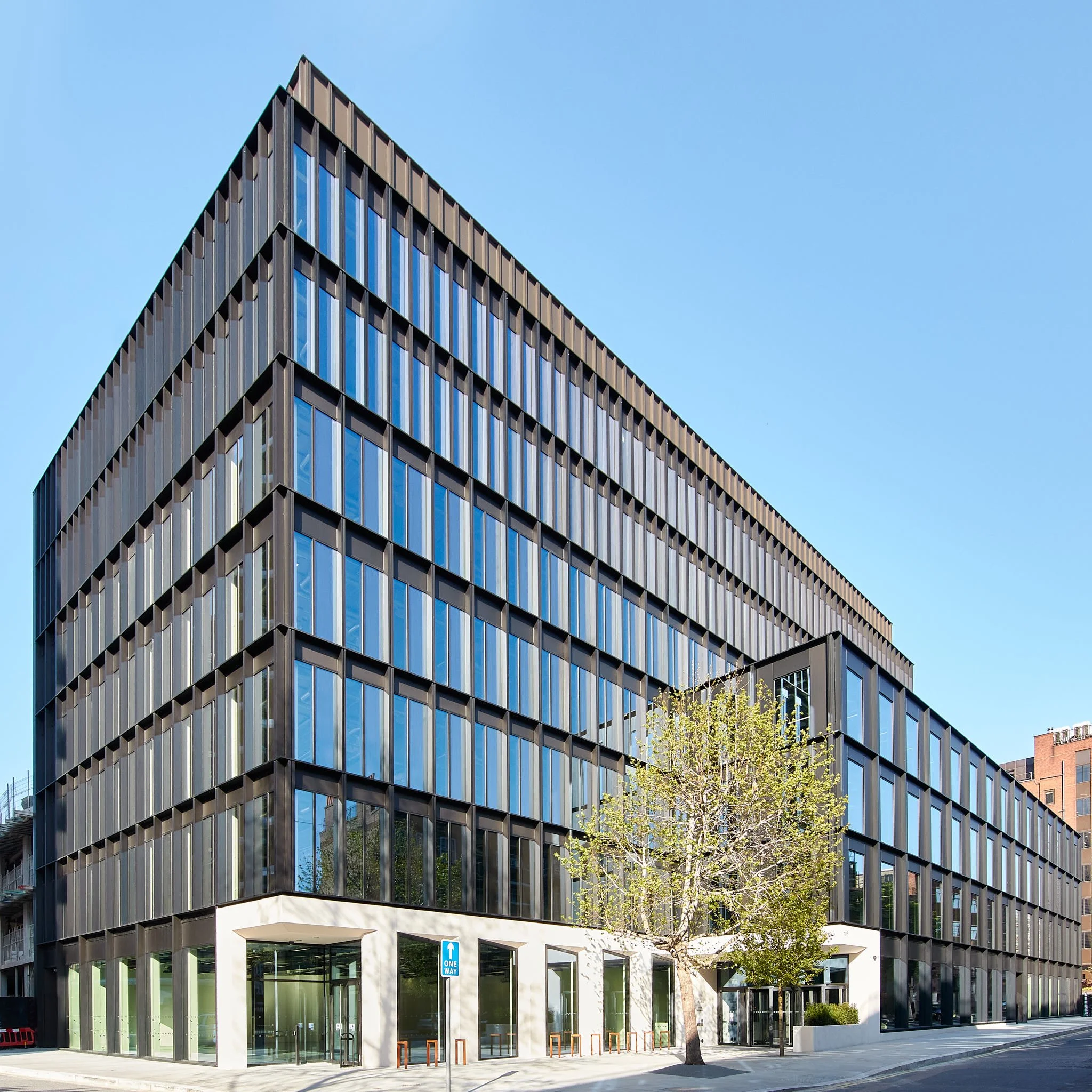
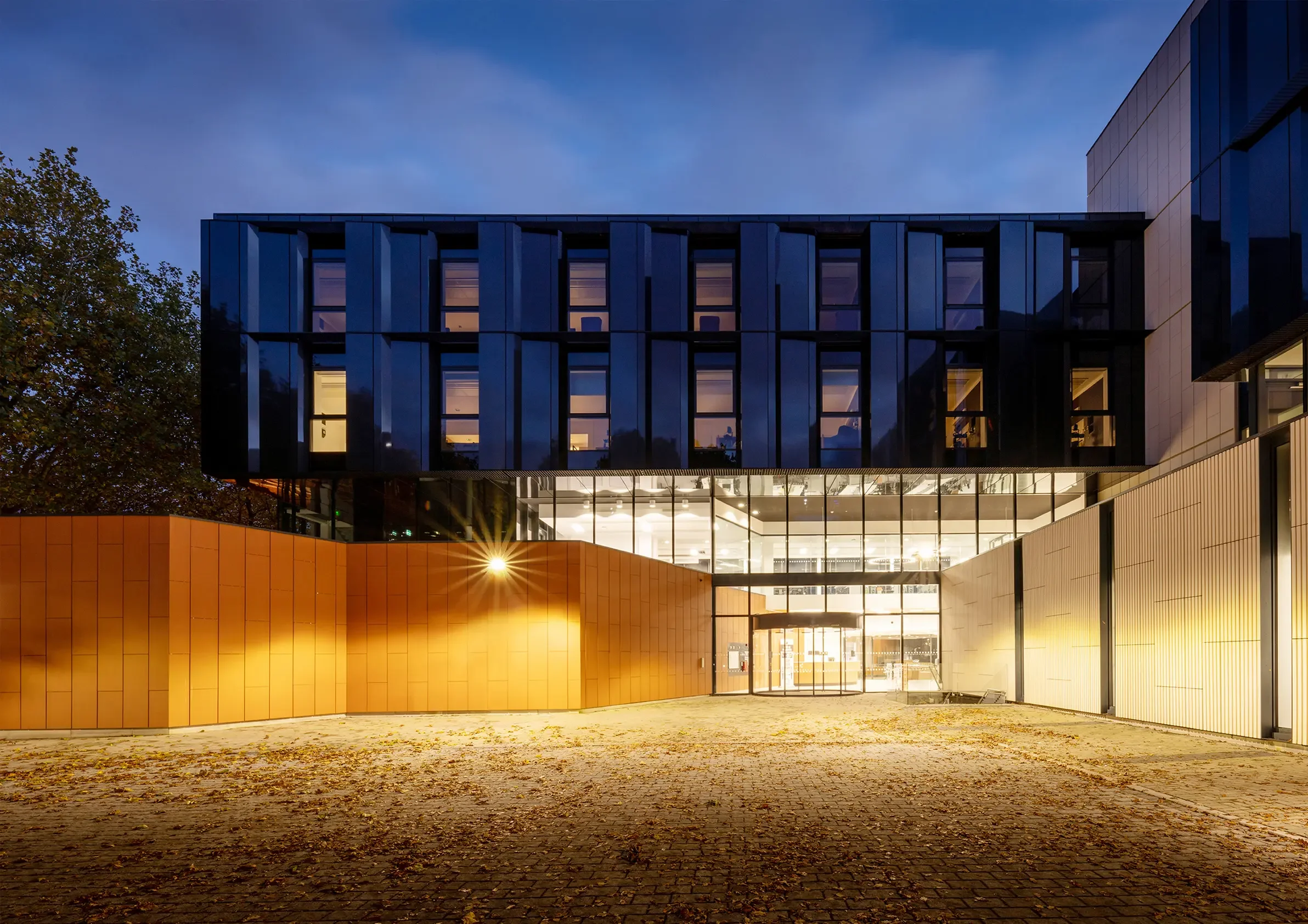
An old paint factory, two metres from the Westway and five metres from the Grand Union Canal – Bryden Wood transformed it into 104 studios across five storeys for west London's creative industries, delivered in two phases while the building never closed.

Bryden Wood Director, Paul O'Neill, describes the project simply: 'the constraints of the build would be its making.' Phase 1, completed in 2009, transformed an old paint factory into a three-storey creative hub. Phase 2, commissioned in 2017 and completed in 2018, added two further storeys – built directly over a fully occupied building, with 104 studio spaces in use throughout construction.
Project details:
-
-
-
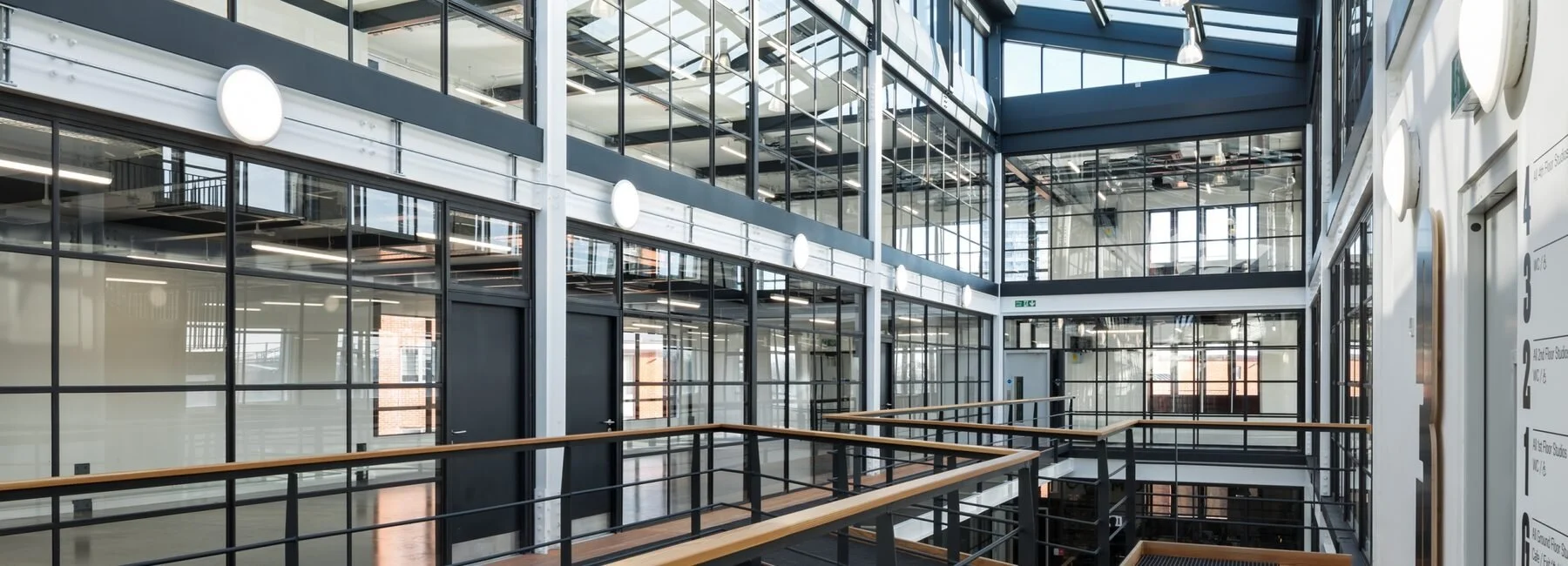
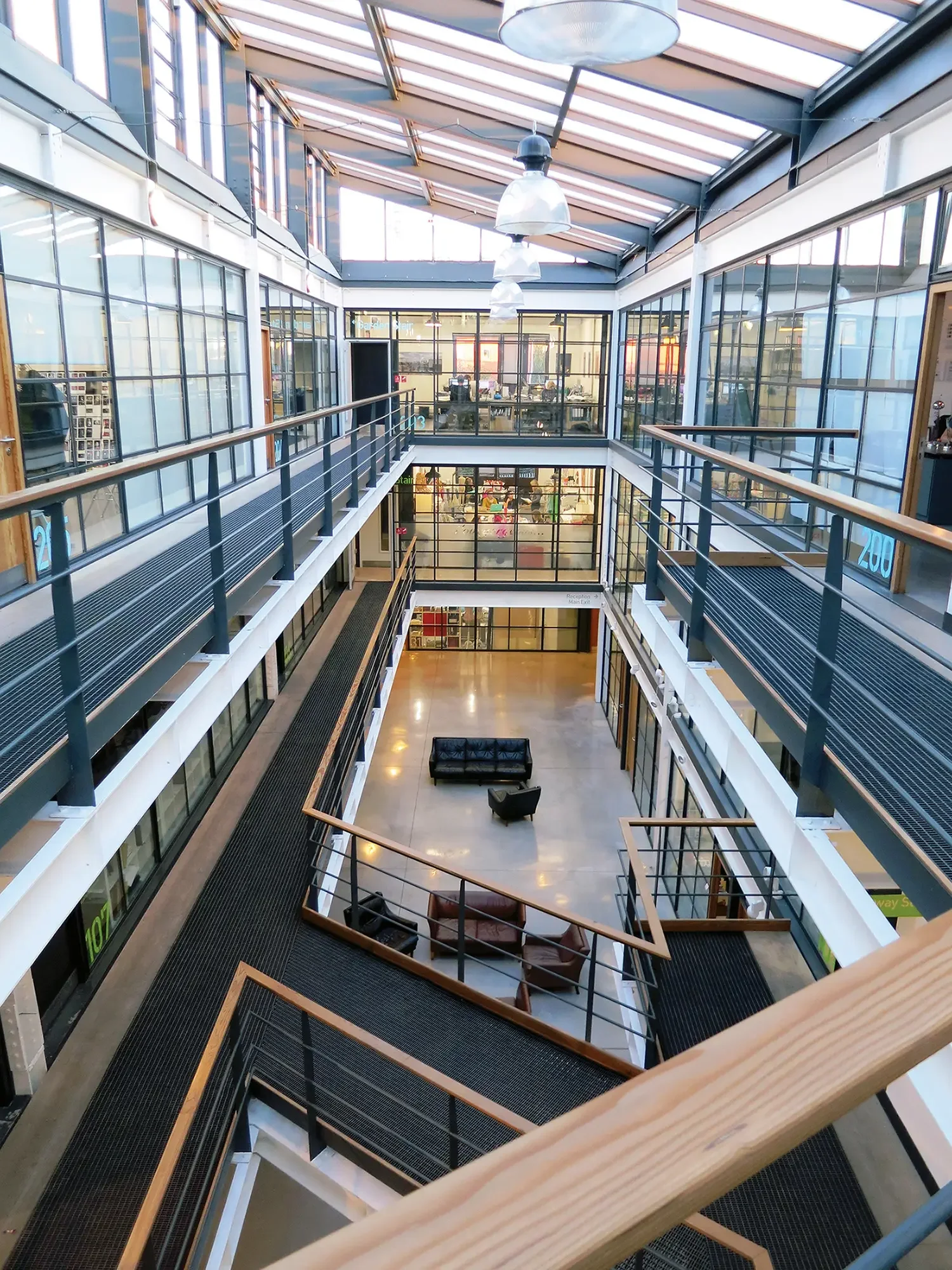
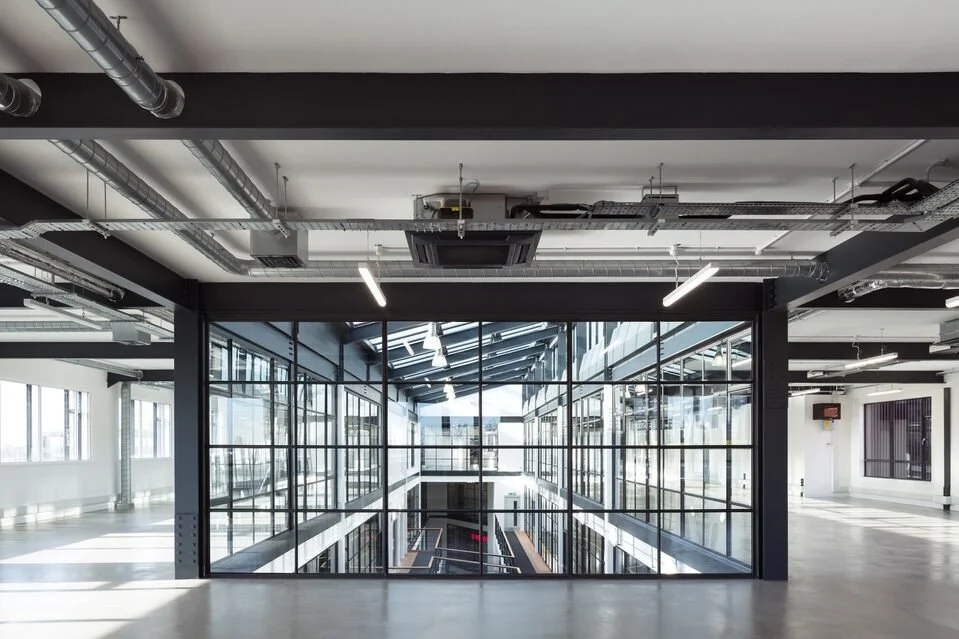
Great Western Studios provides 104 studio spaces ranging from 150 sq ft units for one or two people to 10,000 sq ft spaces for teams of 100 or more – designed so that businesses can grow within the building without leaving it. The five-storey central atrium brings northern light deep into the working spaces and serves as a shared social hub, with a garden, courtyard, and cafe accessible to all tenants. A gallery towards the back of the building has hosted exhibitions by Will Alsop, Darren Almond, Damien Hirst, and Tom Dixon. The project was shortlisted for the AJ Retrofit Awards in 2018 – recognised for delivering high-quality, affordable creative workspace in a part of London where it remains in short supply.
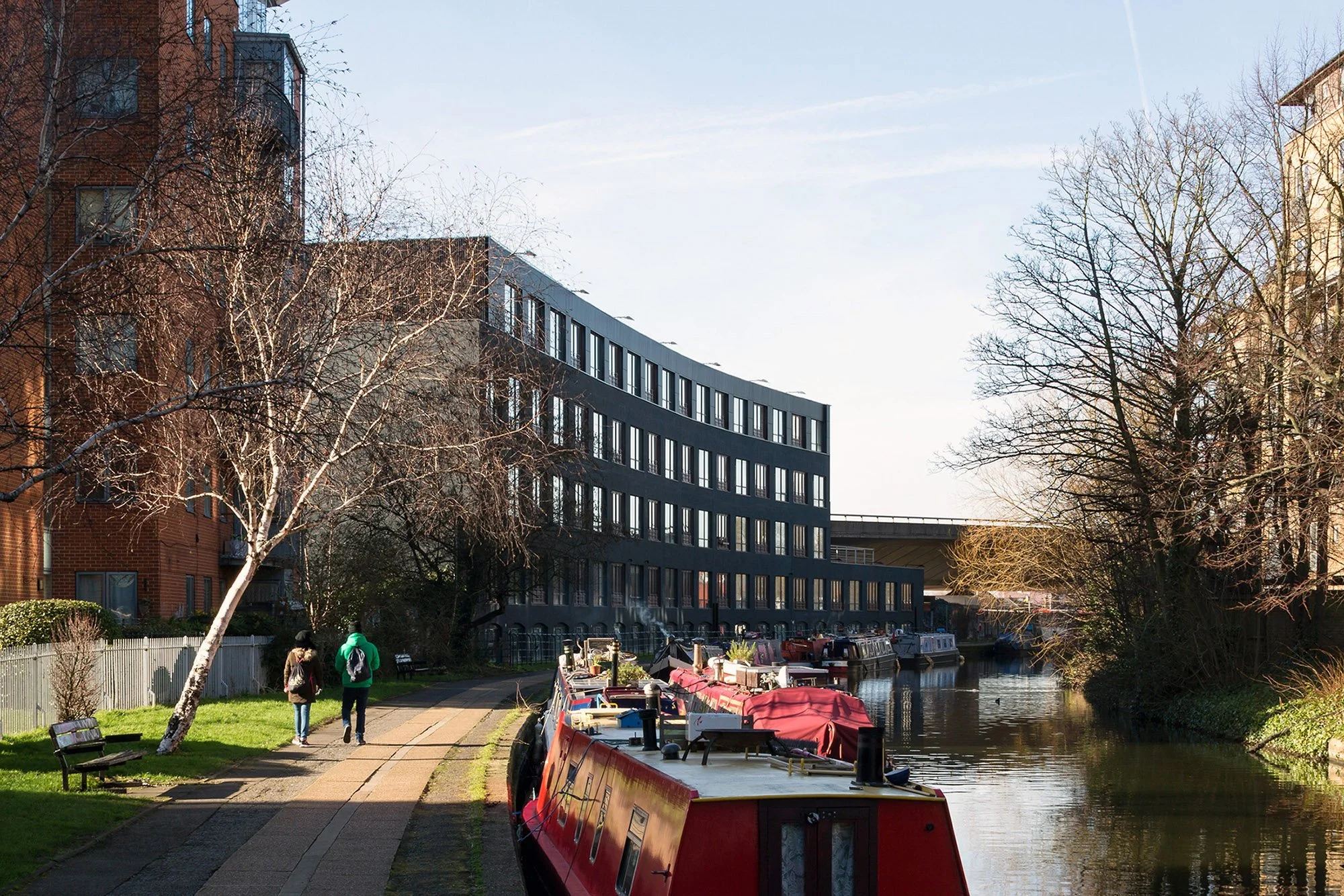
Great Western Studios occupies a triangular site in Northern Notting Hill, west London – the former premises of a paint factory, wedged between the Grand Union Canal and the Westway with only two metres separating the roof from the elevated carriageway and five metres from the canal walls. Bryden Wood was appointed in 2009 to transform the building into studio space for the creative industries, delivering Phase 1 as a three-storey building. Phase 2, commissioned in 2017, added a further two storeys – built directly over the fully occupied Phase 1 building, with tenants in residence throughout construction.
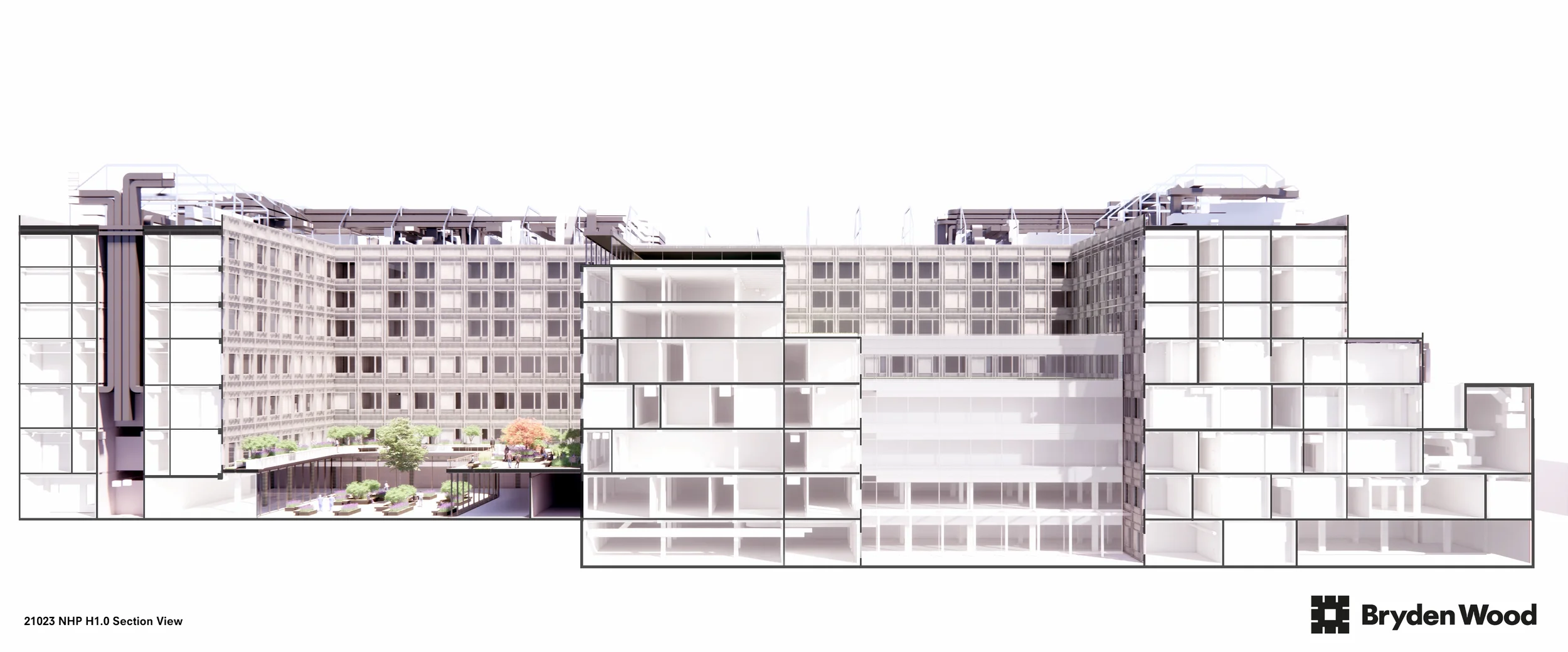
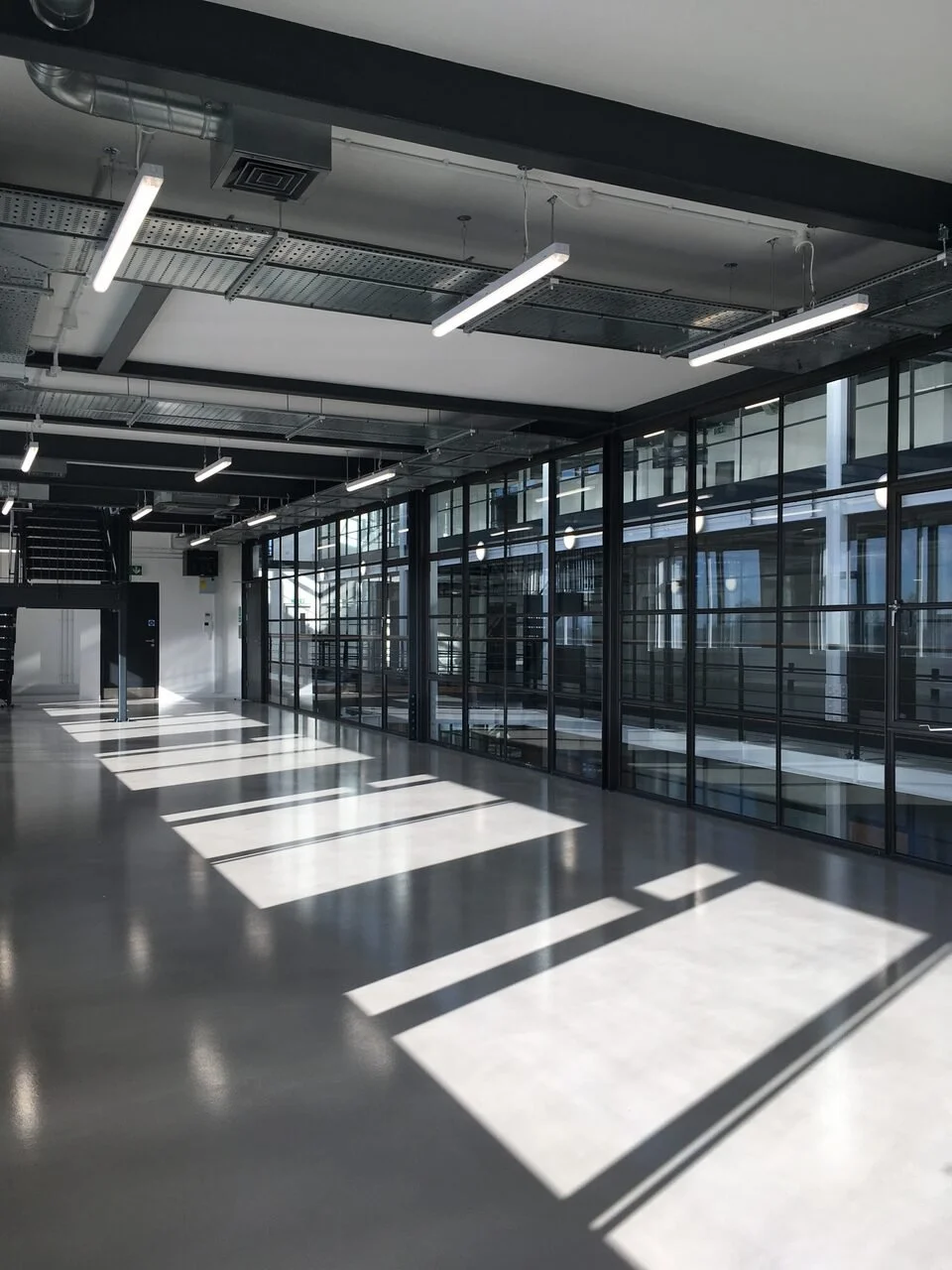
The completed building provides 104 studio spaces arranged around a five-storey central atrium that brings northern light deep into the working environment. Studios range from 150 sq ft units for one or two people to 10,000 sq ft spaces for teams of 100 or more, designed so that businesses can grow within the building as they scale. Each workspace has communal access to a garden and courtyard, and the glass-fronted studios create a sense of transparency and shared creative energy throughout.
The gentle curve of the canal-side elevation is one of the building's most distinctive architectural features – a response to the site's triangular geometry that gives the building its character from the towpath. Towards the back of the building, a gallery has hosted exhibitions by Will Alsop, Darren Almond, Damien Hirst, and Tom Dixon, reinforcing Great Western Studios' position as a serious creative destination rather than a generic co-working offer.
Bryden Wood's Paul O'Neill describes the approach simply: 'the constraints of the build would be its making.' The proximity to the Westway and the canal, the limited site space, and the challenge of building Phase 2 over a fully occupied Phase 1 building – all of these constraints produced a space that is, in O'Neill's words, 'stylish yet affordable, and a perfect contrast to the generic co-working businesses which have established themselves over the past five or so years.'
Great Western Studios is what happens when you let the constraints do the work. A triangular site under a flyover, five metres from a canal, on the footprint of an old paint factory. Bryden Wood turned every one of those constraints into a reason the building works.