London Heathrow T5 Nodes
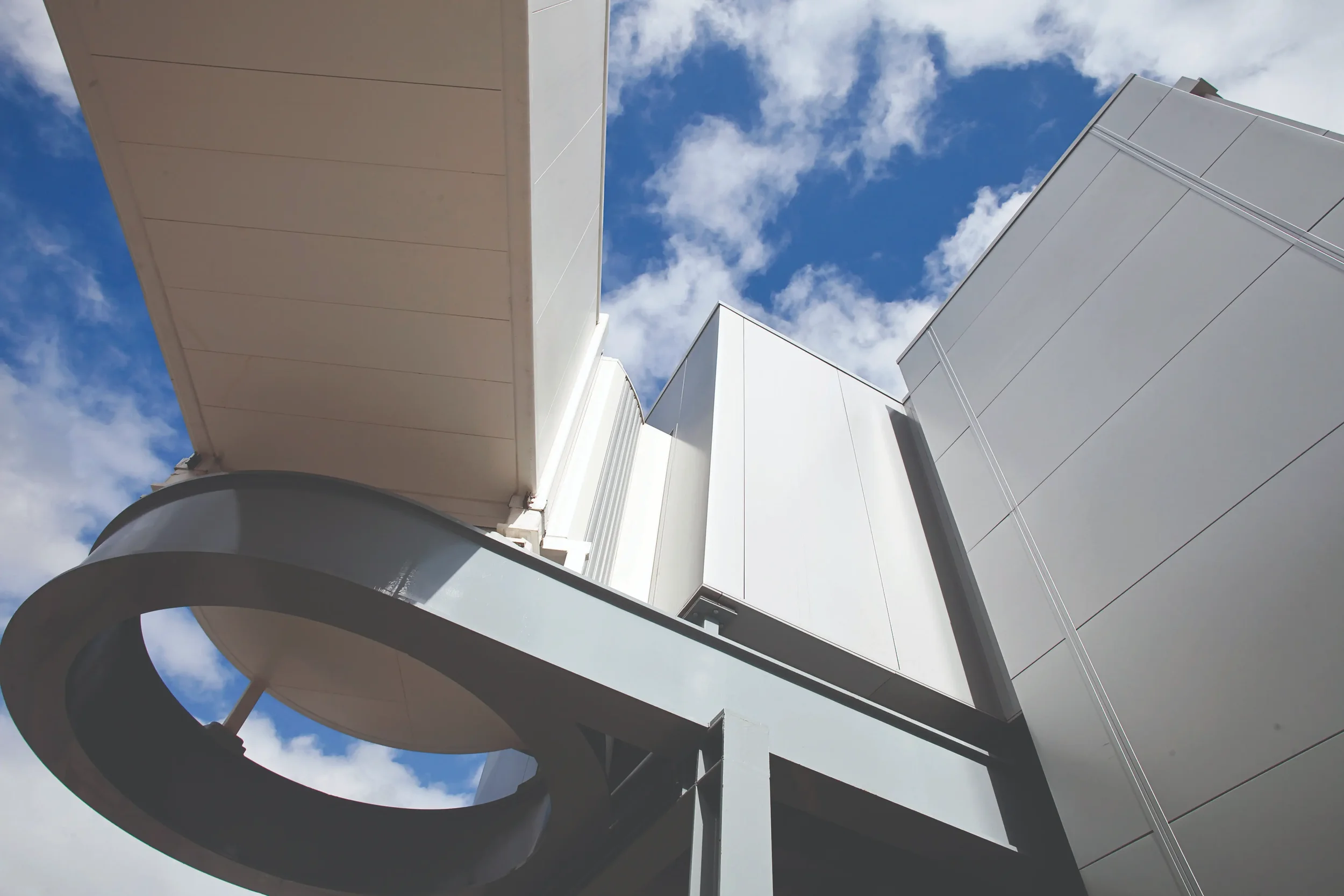
Twelve modular passenger nodes for Heathrow Terminal 5C – designed as a product family, assembled on a live airfield in two weeks.
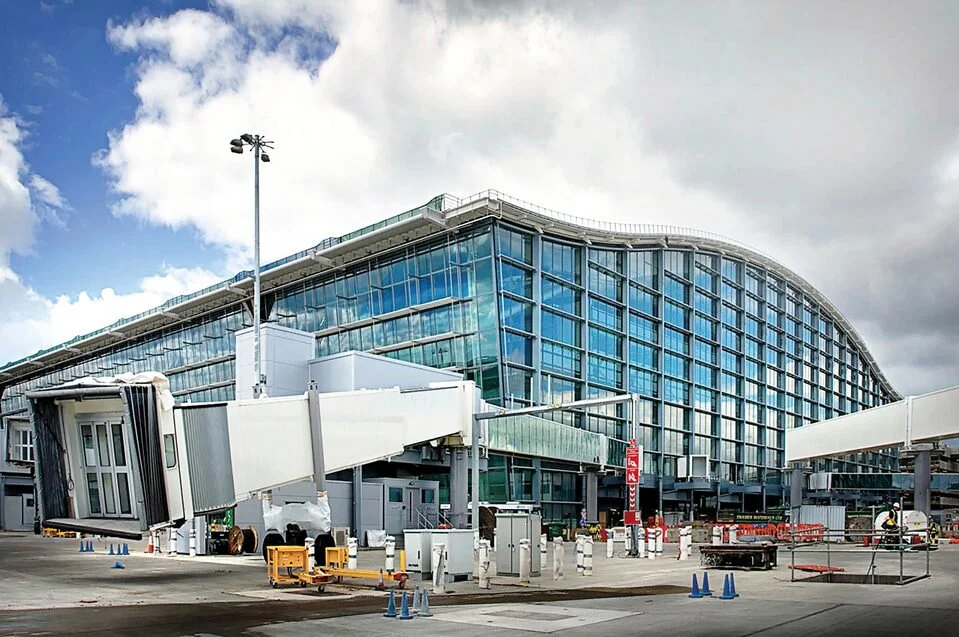
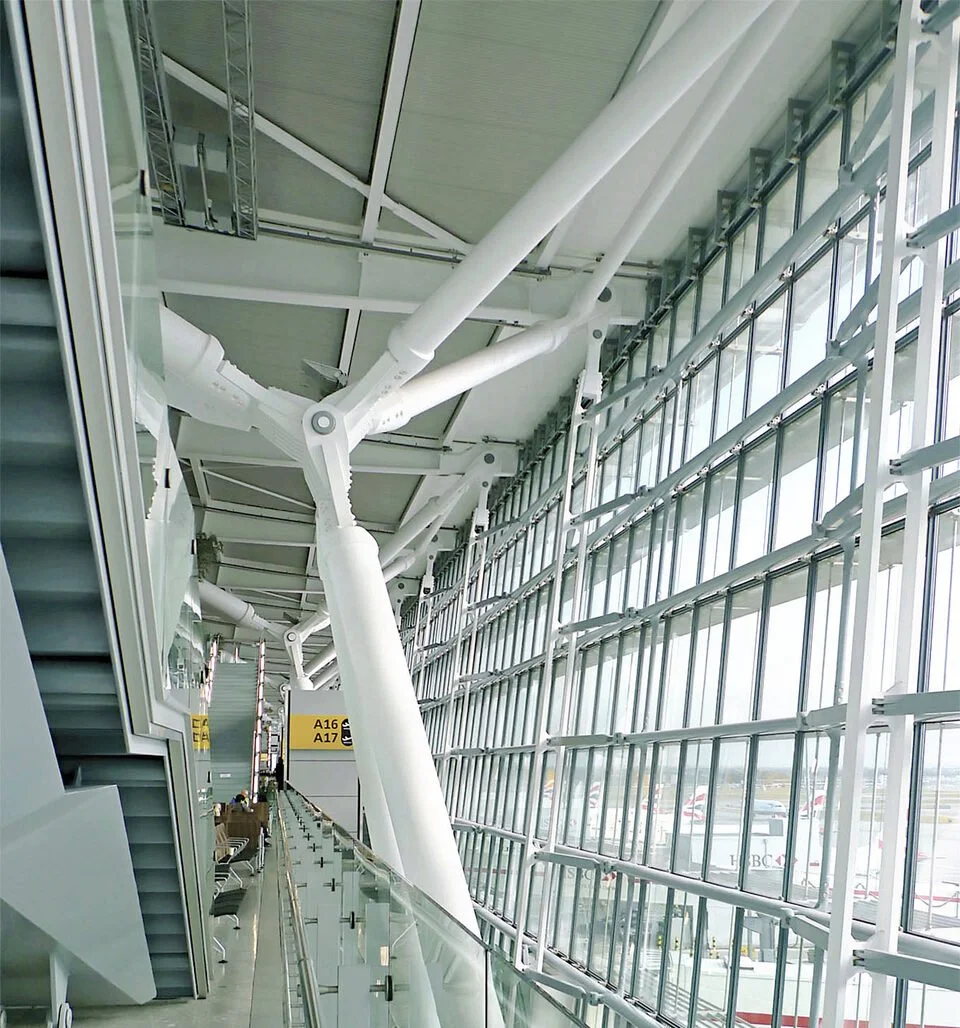
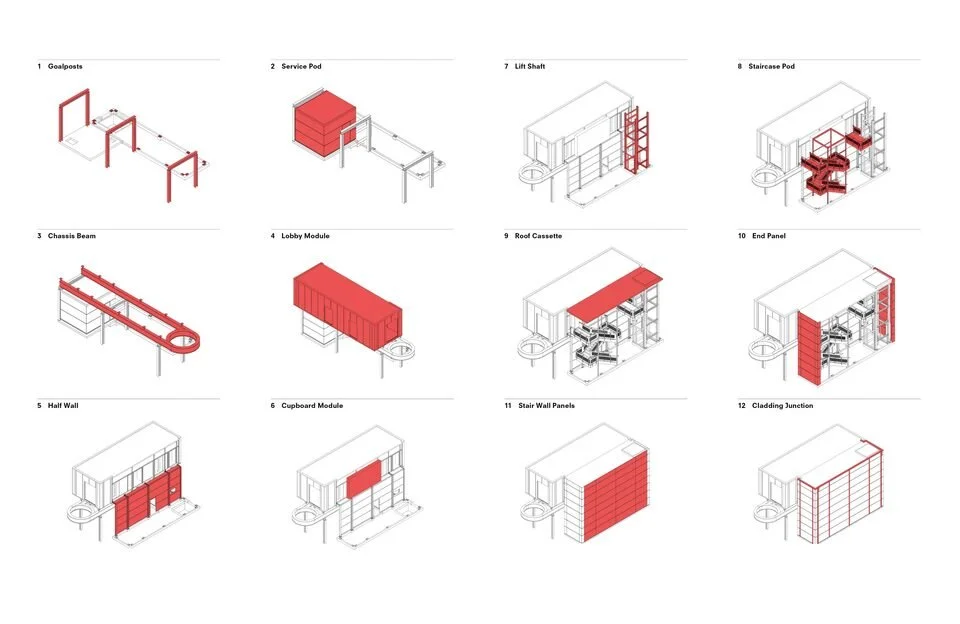
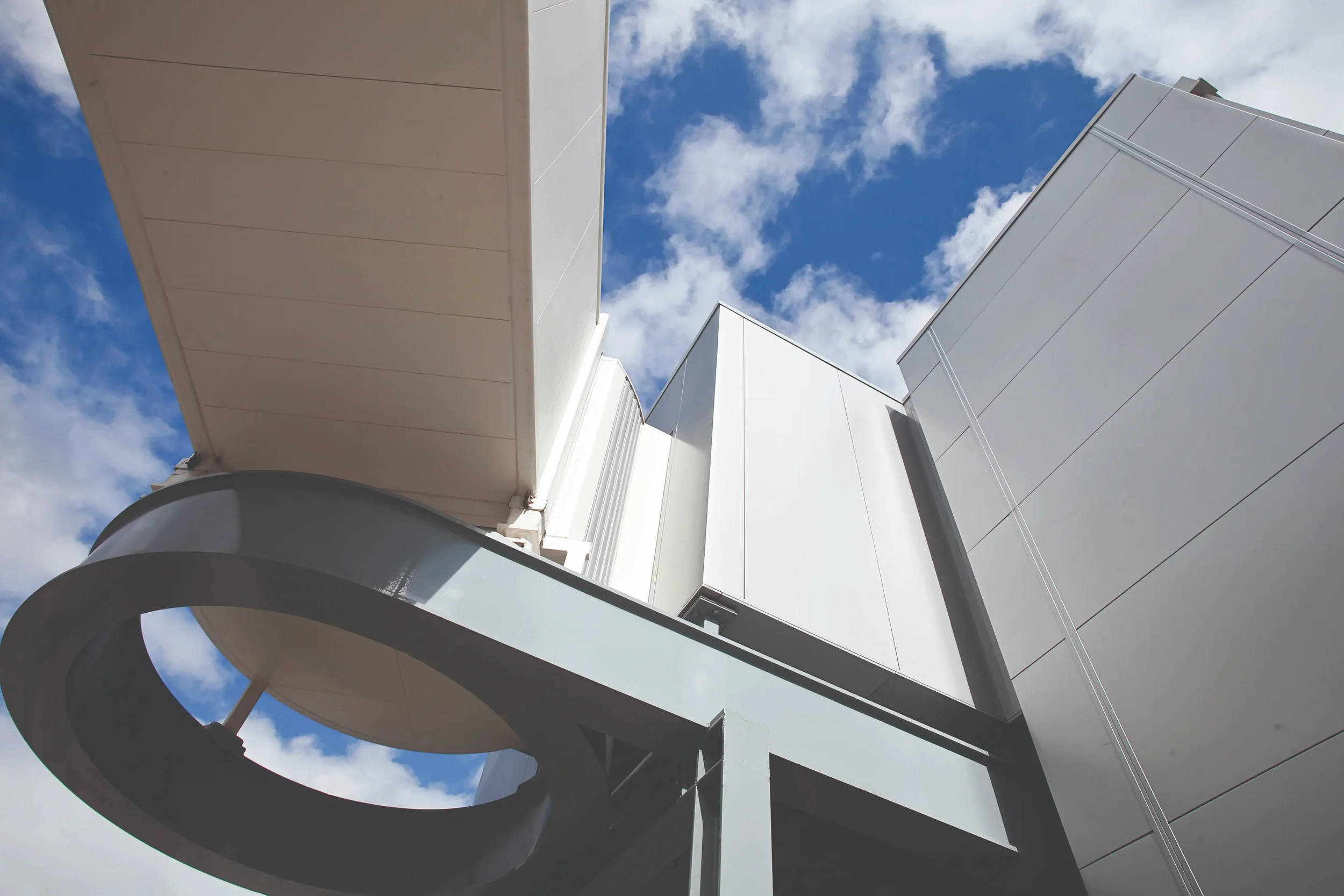
Bryden Wood designed twelve modular passenger nodes for Heathrow Terminal 5C for NG Bailey and HAL – critical transition spaces connecting passengers between gates and aircraft. Each node comprised a passenger reception hall, links to the terminal, vertical circulation, a plant room, a lift shaft, a stair unit, and escape routes to apron level, all delivered fully finished and ready for airfield operations, in a footprint of approximately 17m x 10m x 10m.
Project details:
-
-
-
Bryden Wood identified the common requirements across all twelve node types and used parametric design tools to define a single standardised component set – reducing design time, simplifying coordination, and enabling the entire assembly process to be compressed into a 2-week stand closure. Each node's prefabricated elements – volumetric reception area, panelised wall sections, plant room, lift shaft, and stair unit – were manufactured off-site and delivered ready for assembly. The stand closure returned the facility to full operation 14 weeks earlier than a traditional programme would have allowed.
Bryden Wood was appointed to support the development of Heathrow Terminal 5C by applying a manufacturing-led, systems-driven approach to the design of twelve passenger nodes – the critical transition spaces that connect passengers between gates and aircraft at the terminal. These nodes needed to deliver functional performance while accommodating complex passenger flows, service routes, operational requirements, and strict aviation standards, with each comprising a passenger reception hall, links to the terminal, vertical circulation, and escape routes to apron level.
Each node, approximately 17m x 10m x 10m high, was designed as a modular product to be manufactured in an off-site factory and delivered for rapid on-site assembly.
The prefabricated elements included a volumetric reception area, panelised wall sections, a plant room, a lift shaft, and a stair unit – all delivered fully finished and ready for airfield operations.
The standardisation of the component set across all twelve nodes was the critical design decision. By treating the nodes as a product family rather than twelve individual projects, Bryden Wood was able to rationalise procurement, simplify logistics, and create an assembly process that could be executed reliably on a live airfield – within the tight operational window that Heathrow's schedule allowed.
Designing twelve nodes as twelve individual projects would have produced twelve different problems. Bryden Wood designed them as one product family – and that decision is what made two weeks possible.