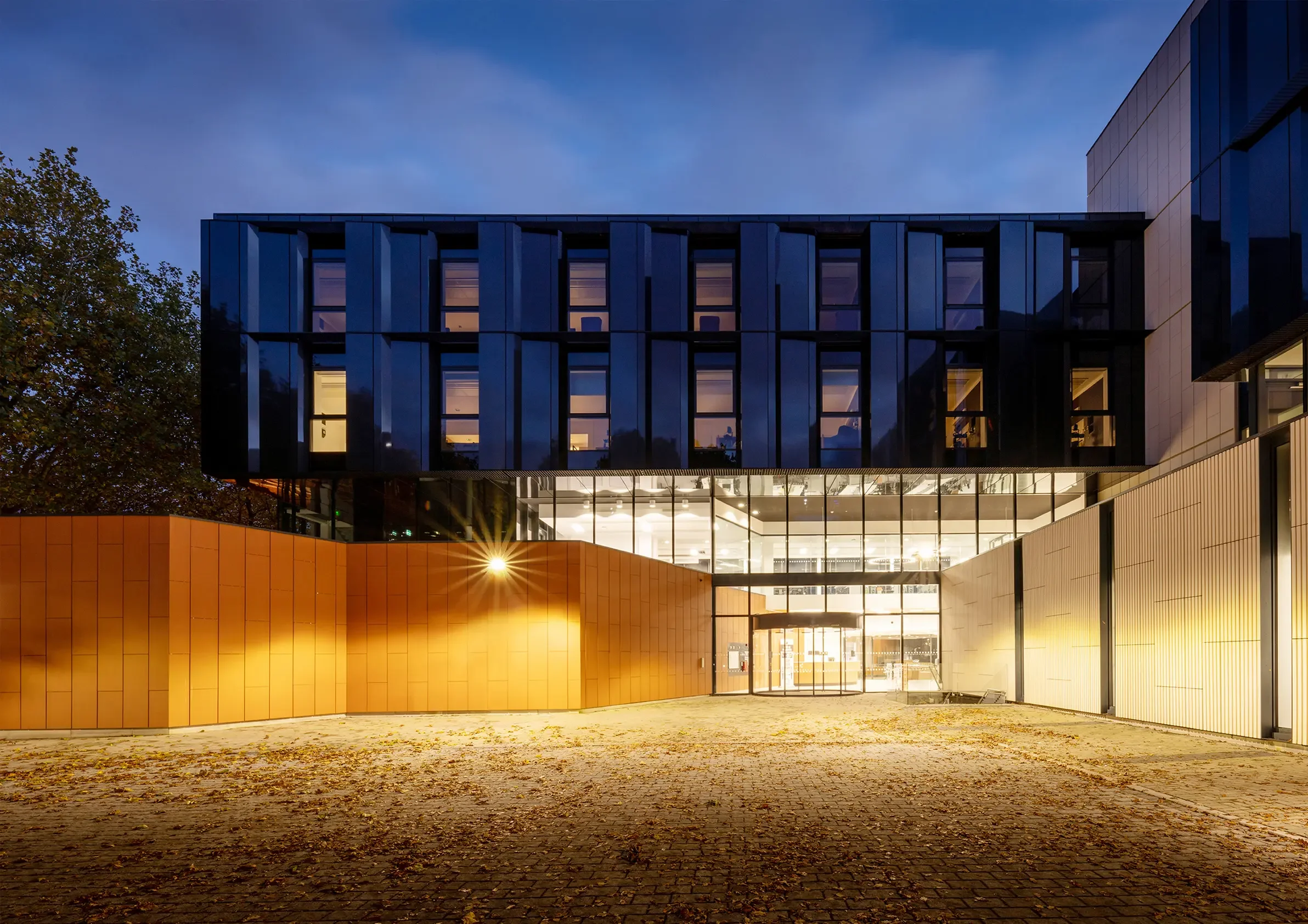
London Heathrow Temporary Flight Connection Centre

A 4,000 m² airport facility built at night on a live airfield — DfMA applied to one of the most operationally constrained sites in the world, delivered concept to completion in less than 12 months.
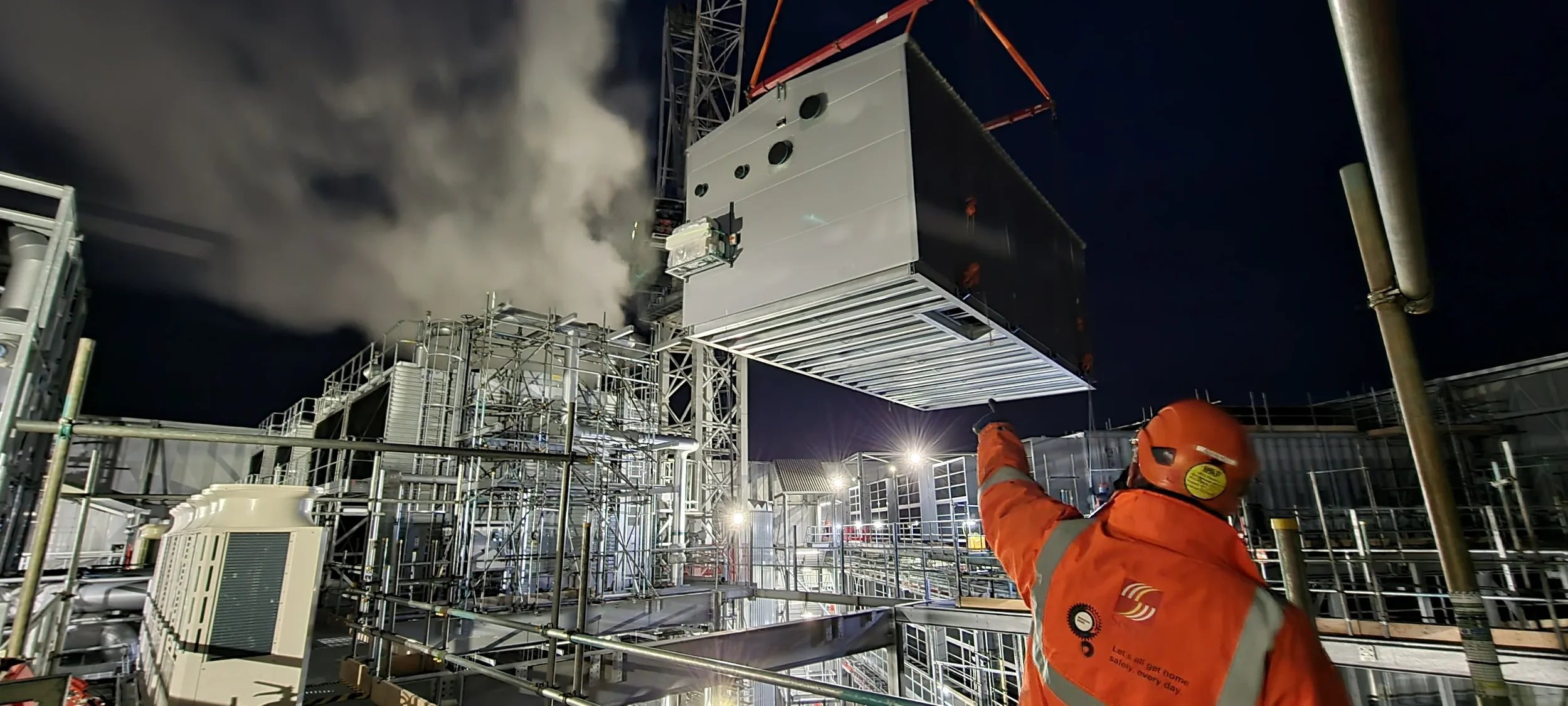
Bryden Wood was appointed by Mace to deliver the 4,000 m² Temporary Flight Connections Centre at London Heathrow Terminal 3 – a facility created to maintain 9,000-passenger-a-day transfer capacity during major airport redevelopment works. The site was on an operating aircraft apron, shared with an aircraft stand, with live aircraft movements in the immediate vicinity. Assembly could only take place during nighttime hours when the airport was not operational.
Project details:
-
-
-
The shorter the construction period, the longer the aircraft stand could generate revenue for Heathrow. Bryden Wood rationalised the building into a kit-of-parts manufactured off-site and installed during nighttime hours – a prefabricated portal frame structure with integrated building envelope, combined with volumetric and panelised prefabricated systems. With most construction activity off-site, impact on airport operations was minimal. The project recorded zero RIDDORs, zero Lost Time Injuries, and zero operational impacts.
The total reduction in stand closures saved £1.2 million in prelims alone.
Bryden Wood applied its DfMA and manufacturing-led approach to one of the most operationally constrained sites it has worked on. The design rationalised the Temporary Flight Connections Centre into a kit-of-parts that could be manufactured off-site in controlled factory conditions and delivered to site for rapid assembly between airfield operations. A prefabricated portal frame structure with an integrated building envelope provided the primary structure, combined with volumetric and panelised prefabricated systems for the internal fit-out.
By taking most of the construction activity off-site, Bryden Wood removed the dependency on skilled site labour, reduced the number of people working on the live airfield at any one time, and maintained the predictability of delivery that a live airport environment demands. The approach that reduced costs by 27% and the construction programme by 38% against a traditional build is the same approach Bryden Wood applies to every project: understand the constraints, rationalise the components, and move as much work as possible away from the most difficult part of the site.
Heathrow Terminal 3 is one of the busiest airports in the world. The Temporary Flight Connections Centre had to work from the first day it opened – and it had to be built without disrupting the airport that surrounded it. That is the problem Bryden Wood's DfMA methodology was built to solve.